
Places and map
Map of the Gospels: Galilee and Judea
The places of The Chosen and of the Gospels: 22 places from the Sea of Galilee to Jerusalem, from Capernaum to Emmaus. Tap a place to see what happened there and the Bible references.
Illustration (AI)
Map
Choose a place
Tap a dot on the map or a name in the list. For each place you will see what the Gospels tell about it, with the Bible references.
All places
What happened there
The Gospels name the places; archaeology and the tradition of the Church help to find them. Where a location is not certain, we say so. Many of the holy sites are cared for today by the Custody of the Holy Land, the Franciscans in the Holy Land.
Galilee
Capernaum
According to Matthew, Jesus settles in Capernaum. He teaches in the synagogue and, in Simon's house, heals Simon's mother-in-law. (Mt 4:13, Mk 1:21–31)1
Here too are set the healing of the paralytic whom his friends lower through the roof and the discourse on the bread of life. (Mk 2:1–12, Jn 6:59)1
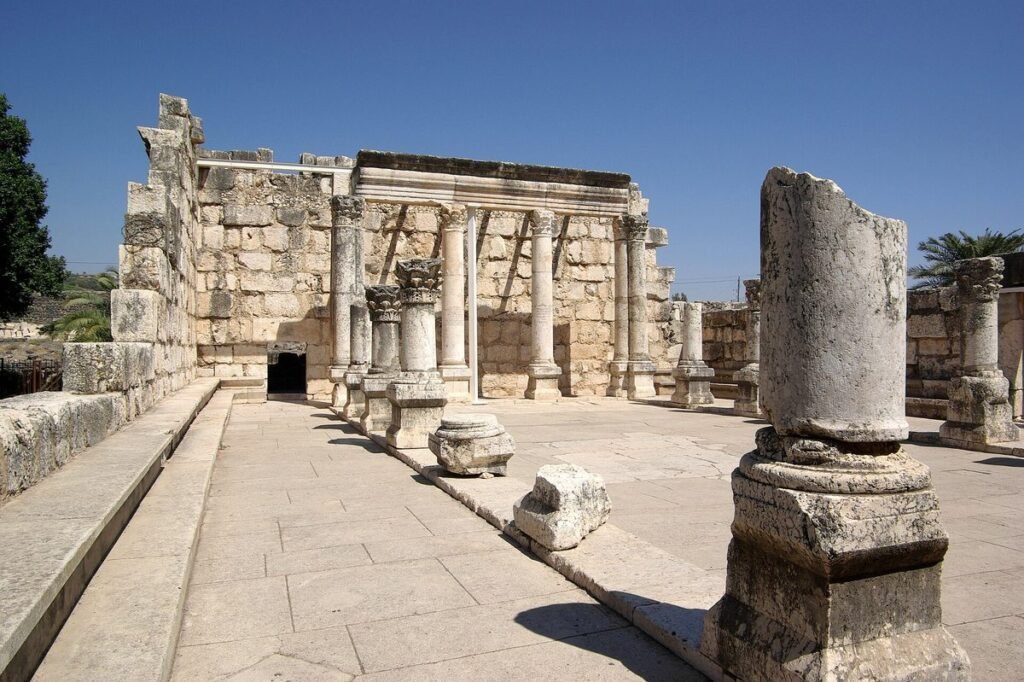
Since 1894 two thirds of the ruins have belonged to the Custody of the Holy Land. From 1968 the Franciscans Virgilio Corbo and Stanislao Loffreda excavated the house venerated as the house of Peter: from the end of the first century part of it served as a meeting place, in the fifth century an octagonal church was built over it, and since June 29, 1990, a memorial church has stood there.23
According to Corbo and Loffreda, the visible synagogue of white limestone dates from the late fourth century. Beneath it they found the basalt pavement of a first-century public building, which they take to be the earlier synagogue.2
Matthew calls Capernaum “his own town”. The centurion of Capernaum had built the synagogue for the community. (Mt 9:1, Lk 7:5)1
Galilee
Magdala
Mary Magdalene, who accompanied Jesus, came from Magdala. (Lk 8:2)1
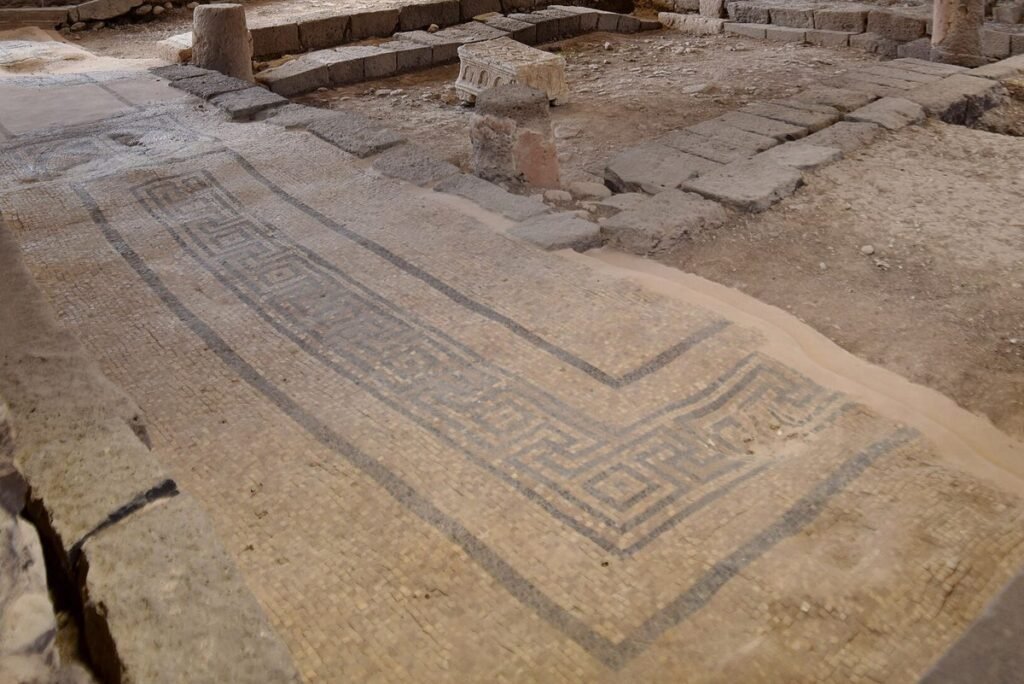
In 2009 a first-century synagogue was found here; the site's present managers call it the oldest yet discovered in Galilee. The coins found in it date from A.D. 5 to 63. The finds include the Magdala Stone, a warehouse on a stone quay and a market.5
Magdala lies almost 4 miles (6 km) north of Tiberias. The town was known for processing and salting fish; ancient sources call it Tarichea, after the Greek word for salted fish. It was destroyed in the Jewish War (66–70) and never rebuilt.6
on the Sea of Galilee
Bethsaida
John calls Bethsaida the town of Andrew and Peter; Philip too came from there. (Jn 1:44)7
Near Bethsaida Jesus heals a blind man. He reproaches Bethsaida and Chorazin, which had seen his mighty deeds and yet had not repented. (Mk 8:22–26, Mt 11:21)1
After the feeding, Jesus sends the disciples ahead by boat to Bethsaida; Luke places the feeding of the five thousand near Bethsaida. (Mk 6:45, Lk 9:10)1
Galilee
Chorazin
Jesus reproaches Chorazin and Bethsaida, which had seen his mighty deeds. (Mt 11:21, Lk 10:13)1
Galilee
Tiberias
Herod Antipas built the city on the west shore of the lake, named it after Emperor Tiberius and made it the capital of his territory.8
John mentions boats from Tiberias after the feeding of the five thousand. (Jn 6:23)1
Lake of Gennesaret, Sea of Tiberias
Sea of Galilee
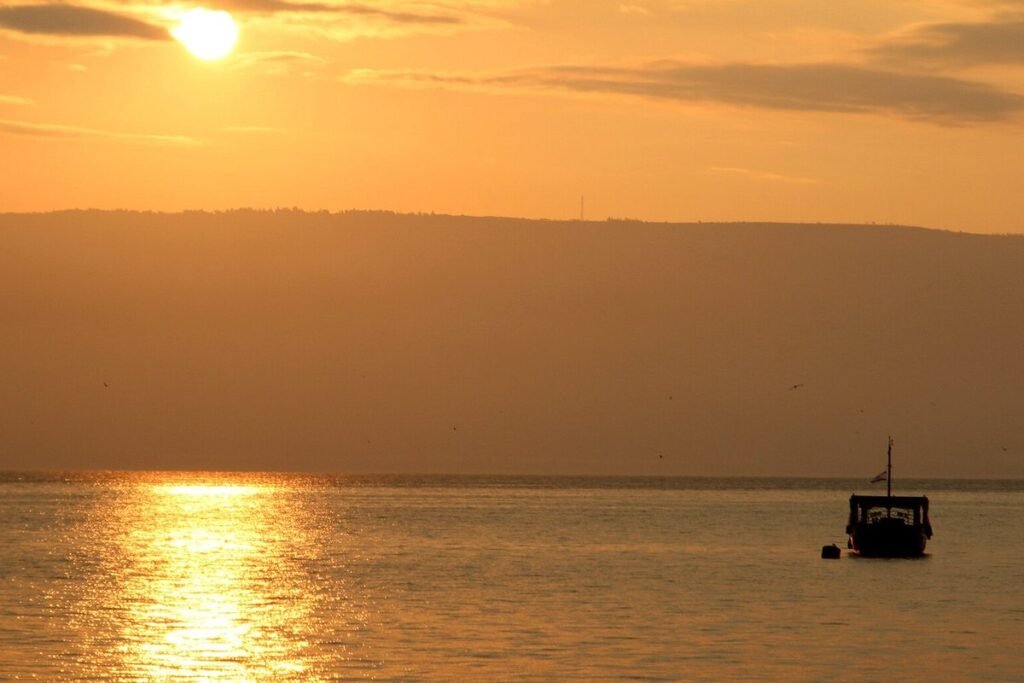
The Gospels call it the Sea of Galilee, the Lake of Gennesaret and the Sea of Tiberias. (Mt 4:18, Lk 5:1, Jn 21:1)1
By the lake Jesus calls the first disciples. Here take place the great catch of fish, the calming of the storm and the walking on the water. (Mt 4:18–22, Lk 5:1–11, Mk 4:35–41, Mt 14:22–33)1
After Easter the risen Lord appears to the disciples by the Sea of Tiberias. (Jn 21:1–14)1
At Tabgha on the northwest shore, tradition remembers three events: the multiplication of the loaves, the appearance of the risen Lord to the apostles and the Sermon on the Mount. The name comes from the Greek Heptapegon, “seven springs”.9
In the Church of the Multiplication, excavated in 1932 by the Benedictine E. Mader, ancient mosaics show loaves and fish in front of the rock beneath the altar. Nearby, the Chapel of the Primacy recalls the meeting of the risen Lord with the apostles and his charge to Peter. (Jn 21:15–17)9
Galilee
Cana
According to John, Jesus works his first sign here: at a wedding he changes water into wine. (Jn 2:1–11)1
At Cana Jesus heals from a distance the son of a royal official from Capernaum. Nathanael too came from Cana. (Jn 4:46–54, Jn 21:2)1
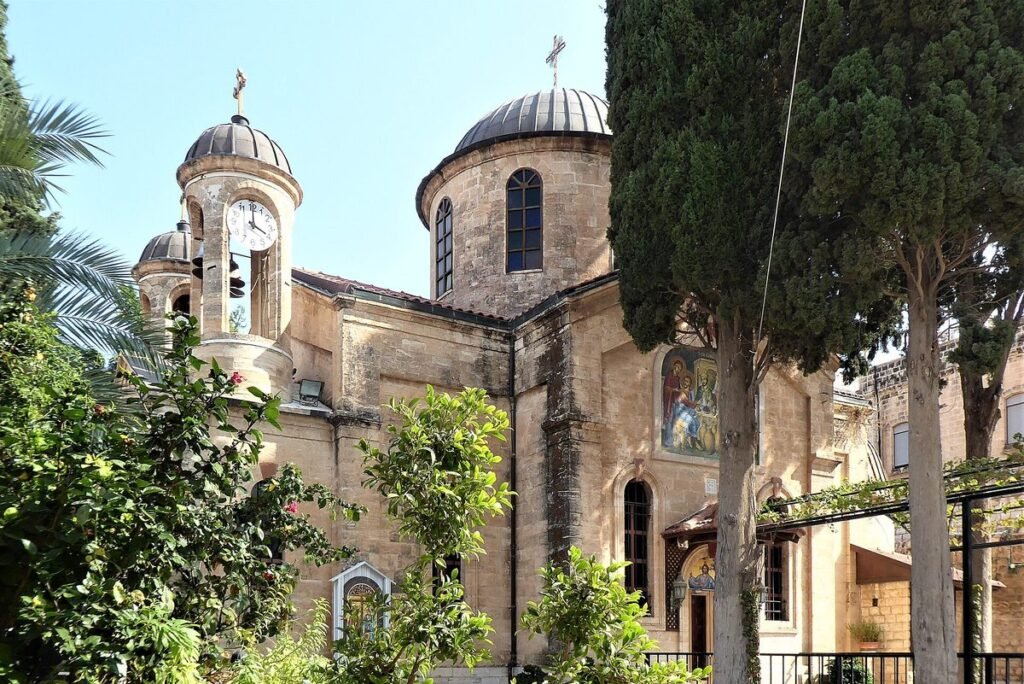
Christian tradition locates Cana at today's Kafr Kanna, about 6 miles (10 km) northeast of Nazareth. The Franciscans built the Wedding Church there in 1881 and enlarged it from 1897 to 1905. Every year married couples renew their wedding vows there.10
Location: Kafr Kanna, from OpenStreetMap11.
Galilee
Nazareth
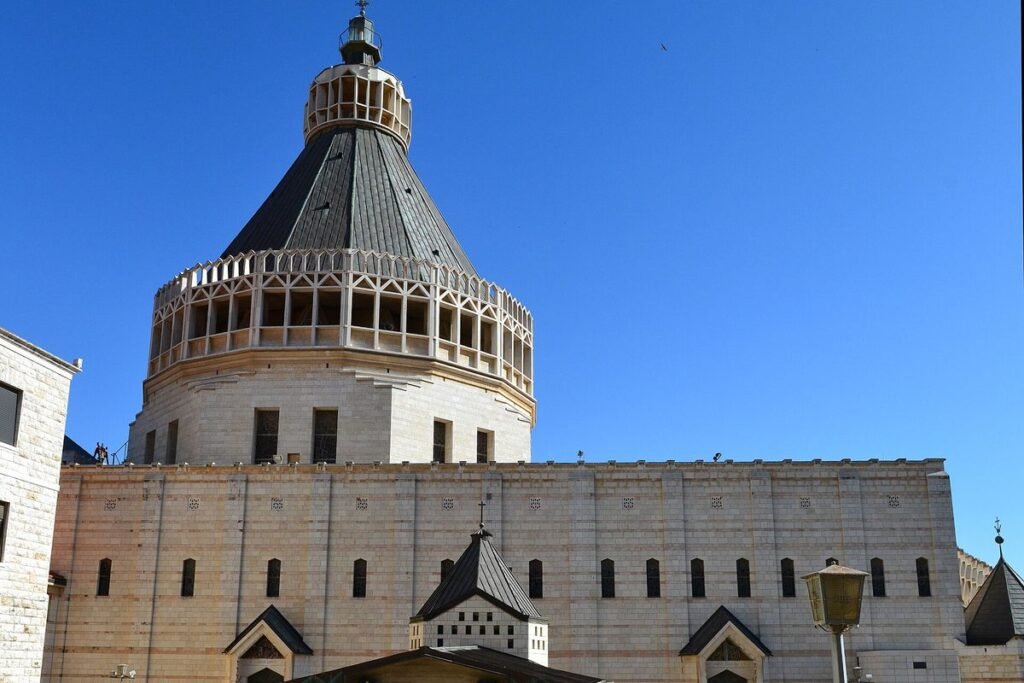
In Nazareth Mary receives the message of the angel; here Jesus grows up. (Lk 1:26–38, Lk 2:39–40, Lk 2:51–52)1
In the synagogue of Nazareth Jesus reads from the prophet Isaiah; his hearers reject him. (Lk 4:16–30)12
The Franciscan Basilica of the Annunciation was built from 1960 to 1969 to plans by Giovanni Muzio, consecrated on Sunday, March 23, 1969, and solemnly opened on the Solemnity of the Annunciation, March 25. In the lower church is the grotto where, according to tradition, the Holy Family lived.1314
Nathanael asks doubtfully whether anything good can come from Nazareth. The Franciscan Church of St. Joseph was built in 1914 over the remains of an older church. (Jn 1:46)1516
at the foot of Mount Hermon
Caesarea Philippi
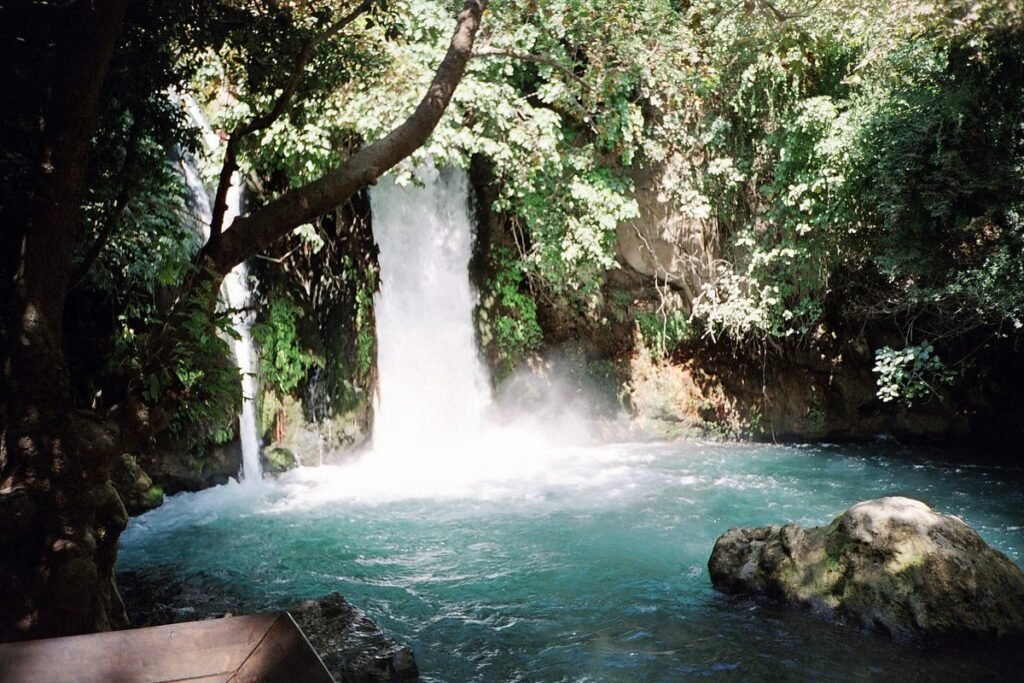
The city lay at the southwestern foot of Mount Hermon.4
In the region of Caesarea Philippi Jesus asks his disciples who they say that he is; Peter professes him as the Christ. (Mt 16:13–20, Mk 8:27–30)1
coast of Phoenicia
Tyre
In the district of Tyre and Sidon Jesus helps the daughter of a Gentile woman who begs him for help. (Mt 15:21–28, Mk 7:24–30)1
Sidon lies farther north, beyond the edge of our map.4
Samaria
Sychar
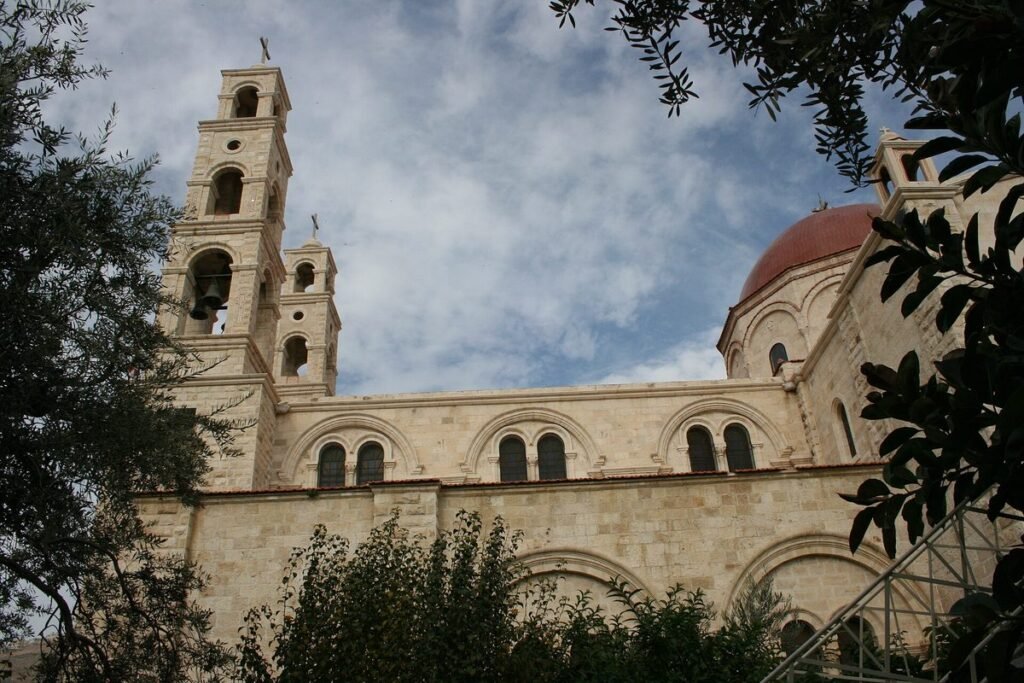
At Jacob's well near Sychar Jesus speaks with a woman of Samaria; afterward many from the town come to believe. (Jn 4:1–42)1
John places Sychar near the plot of land that Jacob had given to his son Joseph. The map shows the site of ancient Shechem, today near Nablus. (Jn 4:5)4
Jordan Valley
Jericho
In Jericho Jesus stays with the chief tax collector Zacchaeus; outside the town he heals blind Bartimaeus. (Lk 19:1–10, Mk 10:46–52)1
In the parable of the Good Samaritan a man goes down from Jerusalem to Jericho. (Lk 10:30–37)1
The Catholic church of Jericho is dedicated to the Good Shepherd, in memory of Bartimaeus and Zacchaeus. Jericho is considered the oldest fortified city of the Near East.17
on the Jordan
Bethany across the Jordan
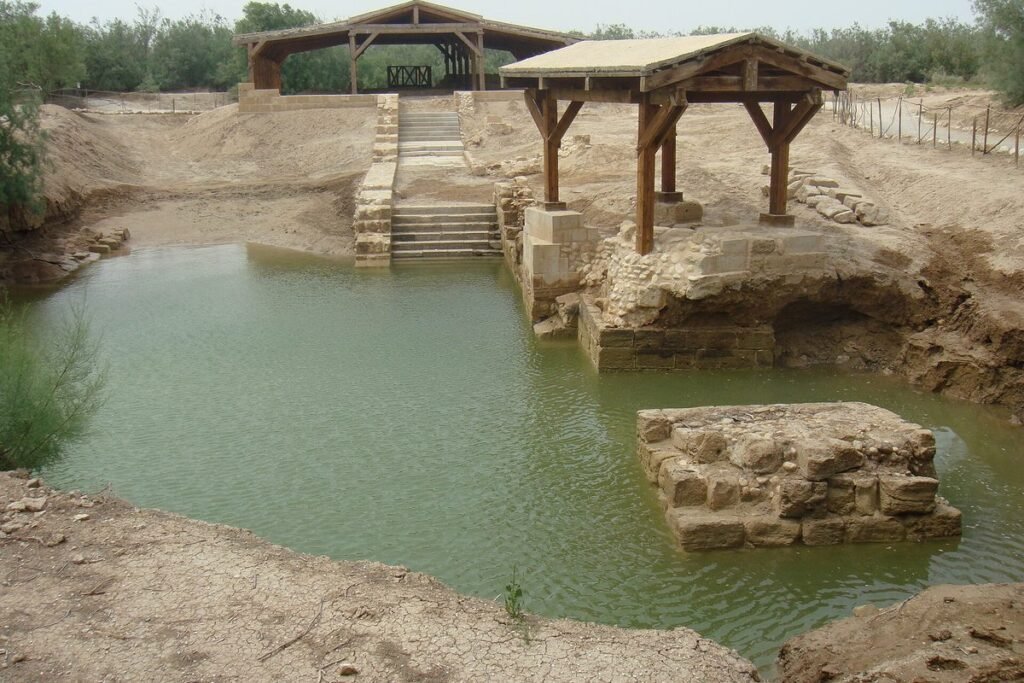
John the Baptist baptizes in Bethany across the Jordan; there the first disciples follow Jesus. (Jn 1:28, Jn 1:35–40)1
At the beginning of his public life, Jesus is baptized by John in the Jordan. (Mk 1:9–11)18
Pleiades lists the site as Bethabara, associated with John the Baptist and attested on the sixth-century mosaic map of Madaba.4
On the west bank of the Jordan, at Qasr al-Yahud near Jericho, a site recalls the baptism of Jesus; the Franciscans have gone there on pilgrimage since at least 1641.19
Judea
Bethany
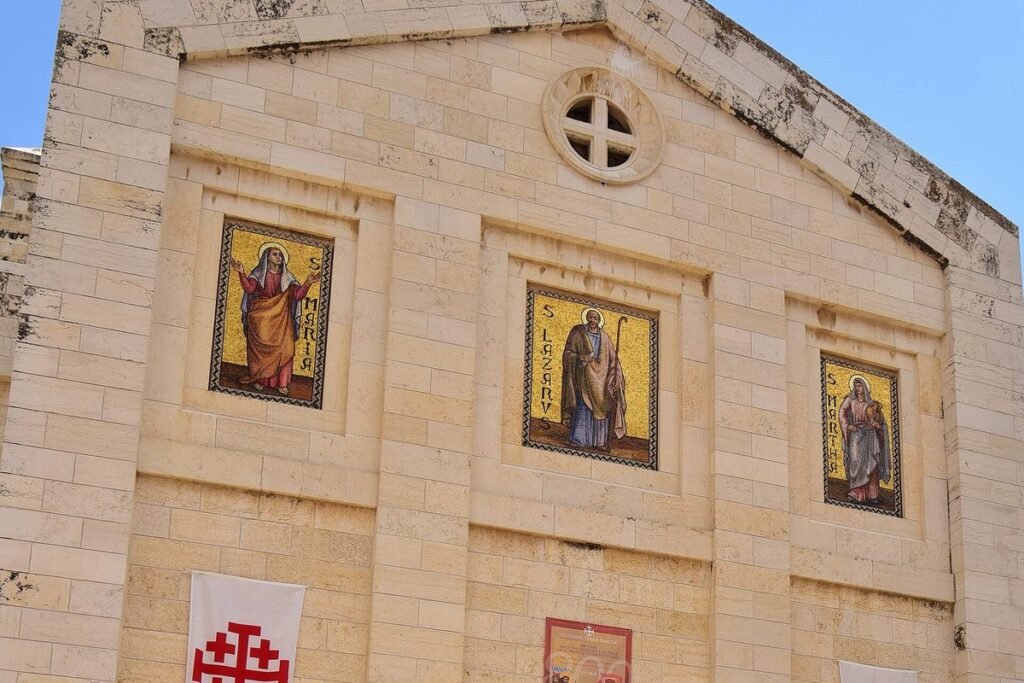
Bethany lies on the eastern slope of the Mount of Olives, about 3 miles (5 km) from Jerusalem; today the town is called al-Eizariya.20
Martha, Mary and Lazarus live here; Jesus raises Lazarus from the dead. (Jn 11:1–44, Jn 12:1–8)1
The Franciscans care for the tomb of Lazarus and a church rebuilt in 1952–53 to plans by Antonio Barluzzi.20
Judea
Jerusalem
At twelve, Jesus stays behind in the temple; later he enters the city for Passover. (Lk 2:41–52, Mt 21:1–11)1
Jesus showed the deepest respect for the temple and went up to it as the privileged place of encounter with God.2122
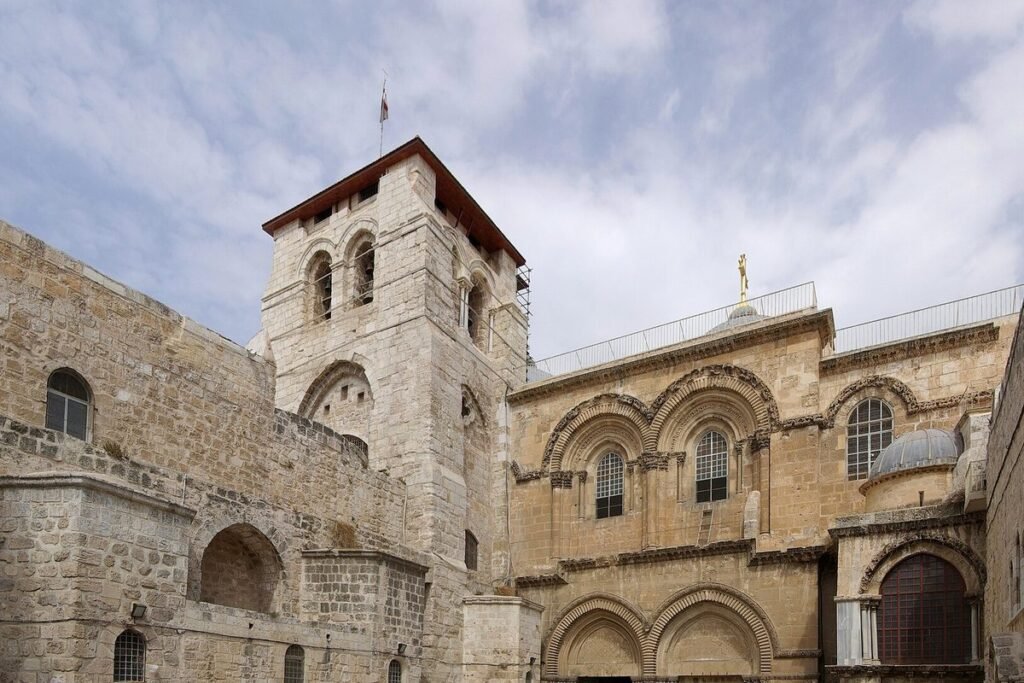
In Jerusalem Jesus celebrates the Last Supper, here he dies on the cross, and here Mary of Magdala meets the risen Lord. (Mk 14:12–25, Jn 19:16–30, Jn 20:11–18)1
At Pentecost the disciples receive the Holy Spirit in Jerusalem. (Acts 2:1–13)1
Gethsemane lies at the foot of the Mount of Olives. There the Franciscans care for a garden with eight very old olive trees and for the Basilica of the Agony, consecrated in 1924 and built by Antonio Barluzzi on the plan of a Byzantine church. (Mk 14:32–42)23
In the Church of the Holy Sepulchre the Church venerates Golgotha and the tomb of Jesus. Excavations here revealed a quarry outside the city wall of the time, with tombs cut into the rock; Emperor Constantine's buildings were dedicated on September 13, 335. (Jn 19:17–20, Jn 19:41–42)24
Since the first centuries, the Upper Room on Mount Zion has been held to be the place of the Last Supper; in 1333 it became the first seat of the Custody of the Holy Land. (Mk 14:15)25
Lk 2:41–52Jn 2:13–22Mt 21:1–11Mk 14:12–25Mk 14:32–42Jn 19:16–30Jn 20:1–18Acts 2:1–13
Judea
Bethlehem
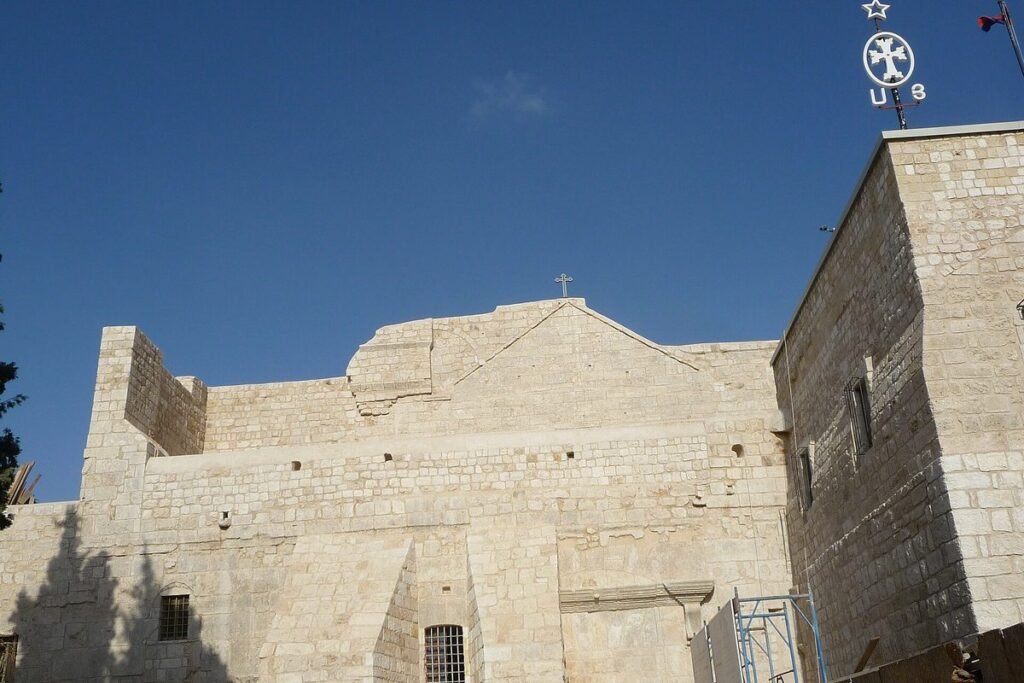
Jesus is born in Bethlehem; shepherds and magi come to him. (Lk 2:1–20, Mt 2:1–12)1
Joseph, of the house of David, went there with Mary from Nazareth. (Lk 2:4–5)15
At the Shepherds' Field near Beit Sahour, where tradition places the angel's message to the shepherds, the Franciscans built a chapel in the shape of a shepherds' tent in 1953, designed by Antonio Barluzzi. (Lk 2:8–20)26
More places
Nain, Tabor, Ein Karem, the Mount of Olives, Bethphage, Emmaus
The map shows these places too; the Mount of Olives, Bethphage, Ein Karem and Emmaus in the close-up “Around Jerusalem”. For some of them the Bible knows the name, but only tradition knows the exact location; we say so each time.
Galilee
Nain
At the gate of Nain Jesus meets a funeral procession: the only son of a widow is being carried out. Moved with pity for the mother, Jesus touches the coffin and raises the young man. (Lk 7:11–17)1
Eusebius attests the memory of the place in the fourth century. The simple Franciscan church was built in 1881 on the remains of an ancient church; west of the village are tombs cut into the rock.27
Location: Nein, from OpenStreetMap28.
Galilee, east of Nazareth
Mount Tabor
The Gospels do not name the mountain of the Transfiguration. The first Christian pilgrims already venerated Tabor as this place; Bishop Cyril of Jerusalem attests the tradition in 348. (Mt 17:1–8, Lk 9:28–36)29
The mountain rises about 1,480 feet (450 m) above the plain and 1,929 feet (588 m) above sea level, about 5 miles (8 km) east of Nazareth. The Franciscans built today's Basilica of the Transfiguration from 1921 to 1924; it was the first work of the architect Antonio Barluzzi.29
Judea, west of Jerusalem
Ein Karem
Tradition venerates the village as the place where Mary visited Elizabeth and as the birthplace of John the Baptist. (Lk 1:39–45, Lk 1:57–66)3031
A Georgian lectionary of the seventh or eighth century already mentions a church here in memory of Elizabeth. Today the Franciscans care for the Church of the Visitation and the Church of St. John the Baptist.3130
east of Jerusalem
Mount of Olives
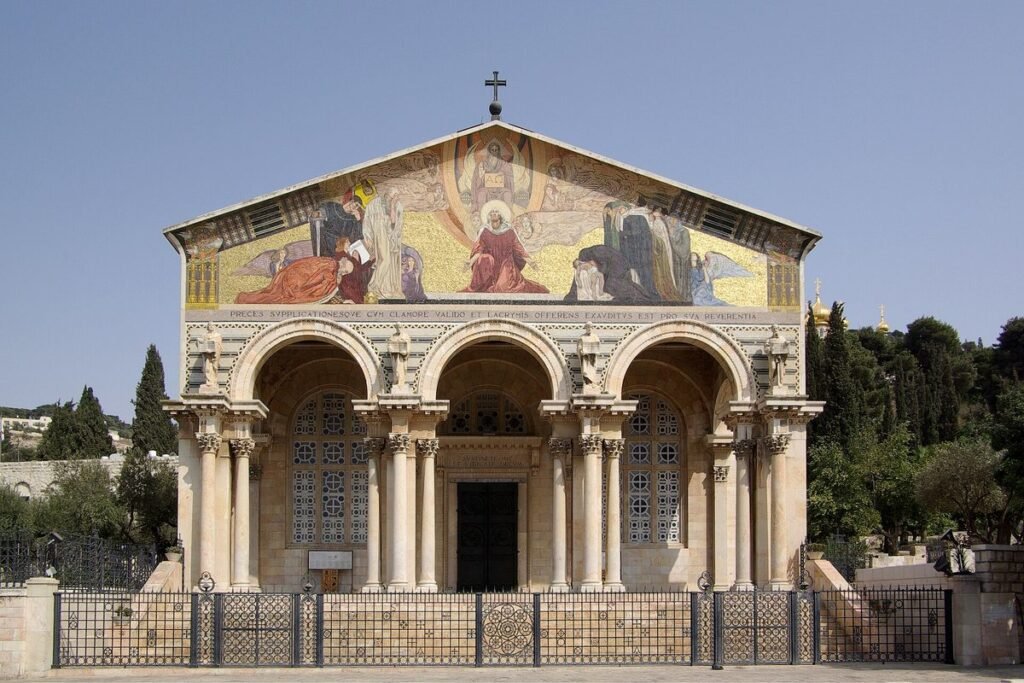
From the Mount of Olives Jesus sees the city and weeps over it. The church of Dominus Flevit, “the Lord wept”, recalls this; its memory is attested from the end of the thirteenth century. (Lk 19:41–44)32
After the Supper Jesus goes as usual to the Mount of Olives and prays; after the Ascension the apostles return from the Mount of Olives to Jerusalem. (Lk 22:39–46, Acts 1:12)1
Lk 19:41–44Lk 22:39–46Acts 1:12
Location: the summit of the Mount of Olives, from OpenStreetMap28.
on the Mount of Olives
Bethphage
Near Bethphage on the Mount of Olives Jesus sends two disciples ahead to fetch the colt on which he rides into Jerusalem. (Mt 21:1–3, Lk 19:29–31)1
At the end of the fourth century the pilgrim Egeria already describes the procession with palms from the Mount of Olives into the city. Since 1933 the Latin Patriarch of Jerusalem has again led it solemnly.33
Mt 21:1–11Mk 11:1–10Lk 19:28–40
Location: the sanctuary of Bethphage, from OpenStreetMap28.
Judea
Emmaus
Luke calls Emmaus a village seven miles from Jerusalem (sixty stadia in the Greek); there two disciples, one of them Cleopas, recognize the risen Lord in the breaking of the bread. (Lk 24:13–35)1
Where the village lay is not certain. The early Church thought of Emmaus-Nicopolis; since the fourteenth century the Franciscans have followed the tradition of El-Qubeibeh. According to the Custody, sixty stadia are about seven miles (11 km).34
Location: El-Qubeibeh, following the Franciscan tradition, from OpenStreetMap28.
Sources
- New American Bible, Revised Edition (NABRE) © 2010, 1991, 1986, 1970 Confraternity of Christian Doctrine, Washington, D.C.: book abbreviations, verse numbers and names follow this edition; links go to the text on the website of the U.S. Conference of Catholic Bishops
- Vatican News: Following in Jesus' footsteps. Capernaum, the town of Jesus (August 2026)
- Custodia Terrae Sanctae (Custody of the Holy Land): Capernaum, place of the Eucharistic promise
- Pleiades, a gazetteer of ancient places (CC BY 3.0): locations of the places
- Magdala (New Gate to Peace Foundation): Archaeology
- Custodia Terrae Sanctae: Magdala
- Benedict XVI, General Audience, September 6, 2006: Philip, the Apostle
- Catholic Encyclopedia: Herod (J. Tierney, 1910)
- Custodia Terrae Sanctae: Tabgha
- Custodia Terrae Sanctae: Cana in Galilee, January 20, 2013
- OpenStreetMap: Kafr Kanna (© OpenStreetMap contributors, ODbL)
- Catholic Encyclopedia: Synagogue (W. Drum, 1912)
- Custodia Terrae Sanctae: Nazareth, the solemnity of the Annunciation of the Lord
- Custodia Terrae Sanctae: Nazareth – Basilica of the Annunciation (sanctuary page, history)
- Pope Francis, Apostolic Letter Patris corde on the 150th anniversary of the proclamation of Saint Joseph as Patron of the Universal Church, December 8, 2020
- Custodia Terrae Sanctae: Nazareth, Saint Joseph
- Custodia Terrae Sanctae: Jericho, Church of the Good Shepherd
- Catechism of the Catholic Church, no. 535
- Custodia Terrae Sanctae: River Jordan, Site of the Baptism of Jesus
- Custodia Terrae Sanctae: Traces of history in Bethany, where Lazarus was resurrected
- Catechism of the Catholic Church, no. 583
- Catechism of the Catholic Church, no. 584
- Custodia Terrae Sanctae: Gethsemane, Basilica of the Agony
- Custodia Terrae Sanctae: Basilica of the Holy Sepulchre
- Custodia Terrae Sanctae: St. Francis ad Coenaculum
- Custodia Terrae Sanctae: Bethlehem, The Shepherds’ Field and Grotto
- Custodia Terrae Sanctae: Nain
- OpenStreetMap: locations of Nain, the Mount of Olives, Bethphage and Emmaus (El-Qubeibeh) (© OpenStreetMap contributors, ODbL)
- Custodia Terrae Sanctae: Mount Tabor, Basilica of the Transfiguration
- Custodia Terrae Sanctae: Ain Karem, The Visitation
- Custodia Terrae Sanctae: Ain Karem, Saint John the Baptist
- Custodia Terrae Sanctae: Dominus Flevit
- Custodia Terrae Sanctae: Bethphage
- Custodia Terrae Sanctae: Emmaus – El Qubeibeh
- Natural Earth: coastlines, lakes and rivers at 1:10 million (public domain)
Checked on October 21, 2026. Bible references follow the New American Bible, Revised Edition (NABRE), the Catholic Bible translation of the U.S. bishops. We give the references and sum up the passages in our own words; each reference links to the full text on the bishops' website. Map base: Natural Earth (public domain); locations of the places from Pleiades (CC BY 3.0); Cana, Nain, the Mount of Olives, Bethphage and Emmaus from OpenStreetMap (© OpenStreetMap contributors, ODbL). Found a mistake? Write to us at hello@biblebehindthescreen.com.
To print
Map: places of the Gospels
Galilee and Judea on one page, with close-ups of the Sea of Galilee and the area around Jerusalem and a list of all the places with their Bible references. For reading along while you watch, at home or in your parish group.
- A map with 22 places of the Gospels
- Bible references from the New American Bible, Revised Edition
- Once a week, an email with our newest guides and articles
Get the map as a PDF
Enter your email address and we will send you the map as a PDF.
Sign-up opens in a few days. Until then, subscribe to the channel and you will be the first to know when the map is ready.
By signing up you confirm that you are at least 16 years old. You will get an email to confirm your address (double opt-in), and you can unsubscribe at any time. More in our privacy policy.
An independent site about the Bible behind movies and shows · not affiliated with any studio or distributor · Bible references from the NABRE · YouTube @biblebehindthescreen