
Times and history
Who ruled, and who believed what?
The world in which The Chosen and the films about Jesus are set: emperors in Rome, Herod and his sons, Pilate and the high priests; Pharisees, Sadducees and scribes; the feasts of the year, the languages of the Gospels and their events in the traditional order.
Illustration (AI)
Rulers
Rome and the family of Herod
Luke dates the appearance of John the Baptist precisely: in the fifteenth year of the reign of Tiberius Caesar, when Pontius Pilate was governor of Judea and Herod was tetrarch of Galilee (Lk 3:1–2).
| Ruler | Role in the Gospels | Bible passages | Dates |
|---|---|---|---|
| Augustus | Roman emperor when Jesus is born1 | Lk 2:1 | – |
| Herod the Great | king of Judea when Jesus is born | Mt 2:1–19 | made king by Rome in 40 B.C., ruled in Jerusalem from 37 B.C., died in the spring of 4 B.C.2 |
| Archelaus | son of Herod, rules in Judea; because of him Joseph settles in Galilee with Mary and the child1 | Mt 2:22 | – |
| Quirinius | governor of Syria at the time of the first census1 | Lk 2:2 | – |
| Tiberius | Roman emperor; in the fifteenth year of his reign John the Baptist appears1 | Lk 3:1 | – |
| Herod Antipas | son of Herod, tetrarch of Galilee; has John the Baptist beheaded | Lk 3:1, Mk 6:14–29, Lk 23:6–12 | built Tiberias; banished to Lyons in A.D. 392 |
| Philip | tetrarch of the region of Ituraea and Trachonitis1 | Lk 3:1 | – |
| Lysanias | tetrarch of Abilene1 | Lk 3:1 | – |
| Pontius Pilate | Roman governor of Judea | Lk 3:1, Mt 27:2, Jn 18:28–19:16 | A.D. 26–363 |
| Annas and Caiaphas | high priests during the public ministry of Jesus4 | Lk 3:2, Jn 18:13–24, Mt 26:57 | – |
| Herod Agrippa I | king, grandson of Herod the Great; has James, the brother of John, killed by the sword1 | Acts 12:1–2 | in the early forties A.D.5 |
Coins and stones from this time
Coins from the time of Jesus and an inscription with the name of Pilate.
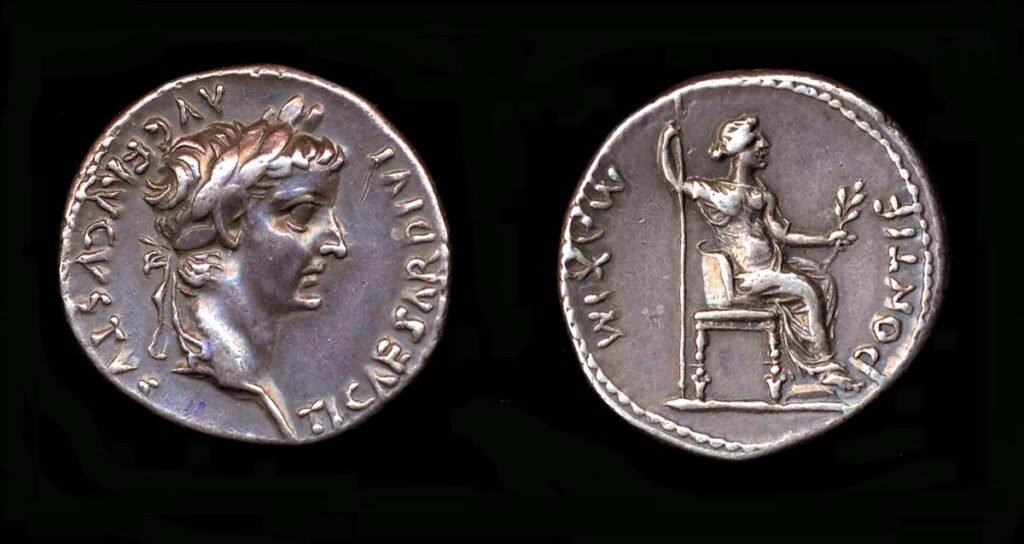
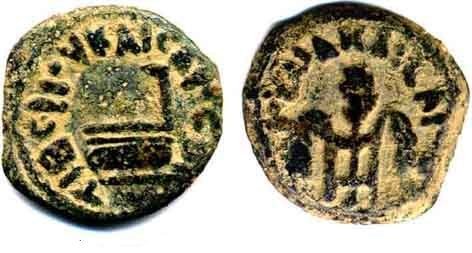
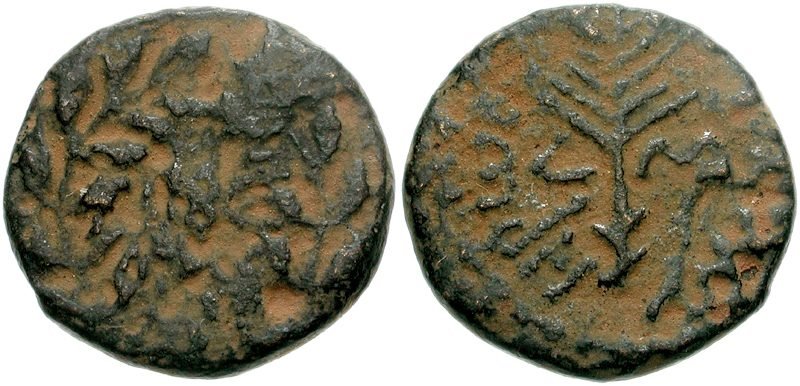
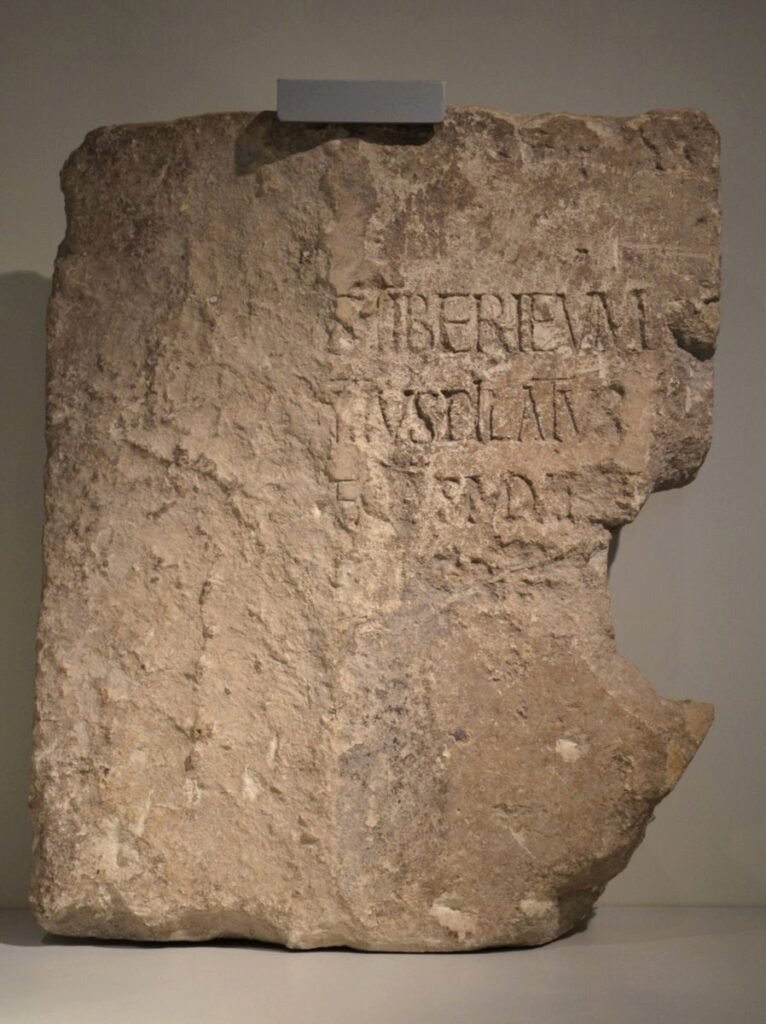
Religious groups
Who was who in the time of Jesus?
We describe the groups as the sources show them, without prejudice: many of their members were devout Jews who took God seriously.
Pharisees
The Pharisees took shape as a group around the third century B.C. Their name is explained as “the separated ones”. They devoted themselves to the Law, taught in the synagogues and had great influence among the people.6
The principle of keeping the whole Law, in spirit as well as in letter, was dear to them, and it led many Jews of Jesus' time to great religious zeal. The relations of Jesus with the Pharisees were not only disputes: Pharisees invite him to dine and warn him about Herod. (Lk 7:36, Lk 13:31, Lk 14:1)78
Nicodemus and the teacher Gamaliel were Pharisees too. (Jn 3:1, Acts 5:34)1
Sadducees
The Sadducees were the leading group among the priests; their name is traced back to Zadok. They rejected the oral traditions held by the Pharisees, as well as the resurrection and the angels. (Mk 12:18, Acts 23:8)9
Their influence disappeared when the Jewish people lost its political independence.9
Scribes
The scribes were the interpreters of the Law. A scribe asks Jesus which commandment is the first of all and hears that he is not far from the kingdom of God. (Mk 12:28–34)10
Zealots
The word comes from “zeal”. Luke calls the apostle Simon the Zealot; Benedict XVI thinks it likely that, even if Simon was not a member of the nationalist movement, he was zealous for God and the Law. (Lk 6:15)11
High priests and the Sanhedrin
The Sanhedrin was the supreme council and highest court of the Jews; according to the Mishnah and Josephus it had 71 members. In the last forty years of its existence the high priest presided, and the assembly met near the temple buildings. (Mk 14:55, Jn 11:47)12
Samaritans
In the time of Jesus, Jews and Samaritans had little to do with each other. Yet in the parable it is a Samaritan whom Jesus holds up as the model of love of neighbor, and a healed Samaritan is the only one who returns to give thanks. (Jn 4:9, Lk 10:25–37, Lk 17:11–19)1
No collective guilt
The trial of Jesus was historically complex, and the personal sin of those involved is known to God alone. Hence, the Catechism says, “we cannot lay responsibility for the trial on the Jews in Jerusalem as a whole.”13
The Church teaches that sinners were the authors and the ministers of all the sufferings of Christ, and she does not hesitate to impute to Christians the gravest responsibility for them.14
Feasts
The feasts of the year
Many events of the Gospels take place on feast days: Jesus goes up to Jerusalem for Passover, the Feast of Tabernacles and the Feast of the Dedication; at Pentecost the disciples receive the Holy Spirit.
| Feast | What the Gospels tell | Bible passages |
|---|---|---|
| Passover and the Feast of Unleavened Bread | The great feast of the Jews. Jesus celebrates the Last Supper in the course of the Passover meal.1516 | Mk 14:1, Mk 14:12 |
| Passover in John | John names three Passovers during the ministry of Jesus.1 | Jn 2:13, Jn 6:4, Jn 11:55 |
| Feast of Tabernacles | Autumn feast; Jesus goes up to Jerusalem and teaches in the temple.1 | Jn 7:2–14, Jn 7:37 |
| Feast of the Dedication | Feast in winter; Jesus walks about in the temple area, in the portico of Solomon.1 | Jn 10:22–23 |
| Pentecost | Feast at the end of the seven weeks after Easter; the disciples receive the Holy Spirit.17 | Acts 2:1–4 |
| Sabbath | Every week, from evening to evening: a day of rest and of gathering in the synagogue.1819 | Lk 4:16, Lk 23:54 |
Language
Aramaic, Hebrew, Greek, Latin
The evangelists give some words of Jesus and of those around him in Aramaic and translate them into Greek right away1. Peter's accent gives him away as a Galilean (Mt 26:73); the inscription on the cross was written in Hebrew, Latin and Greek (Jn 19:20).
According to the testimony of the early Church, Matthew first wrote in the language of the Hebrews; the Gospel we have is in Greek20.
| Word | Meaning | Passage |
|---|---|---|
| Talitha koum | Little girl, arise | Mk 5:41 |
| Ephphatha | Be opened | Mk 7:34 |
| Abba | Father | Mk 14:36 |
| Eloi, Eloi, lema sabachthani? | “My God, my God, why have you forsaken me?” | Mk 15:34 |
| Rabbouni | Teacher | Jn 20:16 |
| Cephas | Rock, in Greek Peter | Jn 1:42 |
| Boanerges | Sons of thunder | Mk 3:17 |
| Golgotha | Place of the Skull | Mk 15:22 |
| Gabbatha | Stone Pavement, in Greek Lithostrotos | Jn 19:13 |
| Messiah | Anointed one, in Greek Christ | Jn 1:41 |
Timeline
The Gospels in order
The Gospels are not a complete chronicle. The order follows tradition; each event comes with its Bible references and its place.
- The Annunciation to MaryLk 1:26–38 Nazareth
- Mary visits ElizabethLk 1:39–56
- The birth of Jesus in BethlehemLk 2:1–7Mt 2:1 Bethlehem
- The shepherds at the mangerLk 2:8–20 Bethlehem
- The presentation in the templeLk 2:22–40 Jerusalem
- The magiMt 2:1–12 Bethlehem
- The flight into Egypt and the return to NazarethMt 2:13–23 Nazareth
- The boy Jesus in the templeLk 2:41–52 Jerusalem
- The baptism in the JordanMk 1:9–11Mt 3:13–17 Bethany across the Jordan
- The temptation in the desertMt 4:1–11Lk 4:1–13
- The call of the first disciplesJn 1:35–51Mt 4:18–22 Sea of Galilee
- The wedding at CanaJn 2:1–11 Cana
- Nicodemus comes at nightJn 3:1–21 Jerusalem
- The woman at Jacob's wellJn 4:1–42 Sychar
- Rejection at NazarethLk 4:16–30 Nazareth
- The call of Matthew the tax collectorMt 9:9–13 Capernaum
- The choosing of the TwelveMk 3:13–19Lk 6:12–16
- Ministry in Galilee, the Sermon on the MountMt 4:23–25Mt 5:1–7:29 Capernaum
- The mission of the TwelveMk 6:7–13
- The death of John the BaptistMk 6:17–29
- The feeding of the five thousandMk 6:30–44Jn 6:1–15 Sea of Galilee
- Jesus walks on the waterMt 14:22–33 Sea of Galilee
- Peter's confessionMt 16:13–20 Caesarea Philippi
- The Transfiguration on a high mountainMt 17:1–9
- The raising of LazarusJn 11:1–44 Bethany
- The anointing at BethanyJn 12:1–8 Bethany
- The entry into JerusalemMt 21:1–11 Jerusalem
- The cleansing of the templeMk 11:15–19 Jerusalem
- The Last SupperMk 14:12–25 Jerusalem
- Prayer in Gethsemane and the arrestMk 14:32–52 Jerusalem
- Before the Sanhedrin and before PilateMk 14:53–15:15 Jerusalem
- Death on the crossMk 15:20–41Jn 19:16–30 Jerusalem
- The ResurrectionMt 28:1–10Jn 20:1–18 Jerusalem
- The disciples on the road to EmmausLk 24:13–35
- Thomas sees the risen LordJn 20:24–29 Jerusalem
- The appearance by the Sea of TiberiasJn 21:1–19 Sea of Galilee
- The AscensionLk 24:50–53Acts 1:9–11
- PentecostActs 2:1–13 Jerusalem
Sources
- New American Bible, Revised Edition (NABRE) © 2010, 1991, 1986, 1970 Confraternity of Christian Doctrine, Washington, D.C.: book abbreviations, verse numbers and names follow this edition; links go to the text on the website of the U.S. Conference of Catholic Bishops
- Catholic Encyclopedia: Herod (J. Tierney, 1910)
- Catholic Encyclopedia: Pontius Pilate
- Catholic Encyclopedia: Caiphas
- Benedict XVI, General Audience, June 21, 2006: James, the Greater
- Catholic Encyclopedia: Pharisees (J. F. Driscoll, 1911)
- Catechism of the Catholic Church, no. 579
- Catechism of the Catholic Church, no. 575
- Catholic Encyclopedia: Sadducees (J. F. Driscoll, 1912)
- Catholic Encyclopedia: Scribes
- Benedict XVI, General Audience, October 11, 2006: Simon and Jude
- Catholic Encyclopedia: Sanhedrin (C. Souvay, 1912)
- Catechism of the Catholic Church, no. 597
- Catechism of the Catholic Church, no. 598
- Catholic Encyclopedia: Pasch (Passover)
- Catechism of the Catholic Church, no. 1340
- Catechism of the Catholic Church, no. 731
- Catholic Encyclopedia: Sabbath
- Catechism of the Catholic Church, no. 2168
- Benedict XVI, General Audience, August 30, 2006: Matthew, the tax collector
Checked on October 21, 2026. Bible references follow the New American Bible, Revised Edition (NABRE), the Catholic Bible translation of the U.S. bishops. We give the references and sum up the passages in our own words; each reference links to the full text on the bishops' website. Found a mistake? Write to us at hello@biblebehindthescreen.com.
An independent site about the Bible behind movies and shows · not affiliated with any studio or distributor · Bible references from the NABRE · YouTube @biblebehindthescreen