
People
The people around Jesus
The people you meet in The Chosen and in films about Jesus: what the Gospels report about the apostles, the family of Jesus, Mary Magdalene, Nicodemus and others, and what the tradition of the Church knows. Every statement has a Bible reference and a source; where The Chosen shows a person, the episode is listed.
Illustration (AI)
The Twelve and Matthias
From the beginning of his public life Jesus chose twelve men to be with him and to share in his mission1. The Gospels and the Acts of the Apostles hand down four lists of the Twelve; the order of the names is not the same in all of them2.
The twelve apostles compared
The Twelve whom Jesus chose, and Matthias, who joined them after Easter: what the Gospels report about them, what the tradition of the Church knows and when the Church remembers them. Choose two to four apostles.
Quick picksAt the Transfiguration (Mk 9:2)Two pairs of brothers (Mk 1:16–20)Judas Iscariot and Matthias (Acts 1:15–26)
| Petercalled by the lake | Johncalled by the lake | Matthewthe Twelve | |
|---|---|---|---|
| Name | |||
| Name and surname | Simon; Jesus calls him Cephas, in Greek Petros: rock | John: “the Lord has worked grace” | Matthew: “gift of God”; in Mark and Luke, Levi |
| Origin and family | |||
| Origin | Bethsaida; lived in Capernaum | by the Sea of Galilee | Capernaum (customs post) |
| Family | son of John; brother of Andrew; married | son of Zebedee; brother of James | Mark calls Levi the son of Alphaeus |
| In the Gospels | |||
| Occupation or task | fisherman | fisherman | tax collector |
| Call | Jn 1:40–42; Mt 4:18–20; Lk 5:1–11 | Mt 4:21–22; Mk 1:19–20 | Mt 9:9; Mk 2:14; Lk 5:27–28 |
| Key passages | Mt 14:28–31; Mt 16:13–20; Lk 22:54–62; Jn 21:15–19 | Mk 5:37; Mk 9:2; Lk 22:8; Jn 13:23; Jn 19:25–27; Jn 20:2–8 | Mt 9:9–13; Mt 10:3 |
| In the lists of the apostles | |||
| Matthew | 1st · named first | 4th | 8th · “the tax collector” |
| Mark | 1st | 3rd | 7th |
| Luke | 1st | 4th | 7th |
| Acts of the Apostles | 1st | 2nd | 8th |
| In the tradition of the Church | |||
| Mission after Easter | Jerusalem, Antioch, Rome | Ephesus; exiled to Patmos | first among the Jews, then among other peoples |
| Death | martyred in Rome, on a cross | at a great age in Ephesus, under Emperor Trajan | according to Heracleon, quoted by Clement of Alexandria, not a martyr's death |
| Tomb and relics | Rome: St. Peter's Basilica stands over his tomb | Ephesus: the ruins of Justinian's basilica | – |
| Writings in the New Testament | the Letters of Peter | the Gospel, the Letters and the Book of Revelation | the Gospel according to Matthew |
| Memorial | |||
| Feast in the calendar | June 29 · Solemnity of Saints Peter and Paul; February 22 · Chair of Saint Peter | December 27 · Feast | September 21 · Feast |
All sources for this comparison (42)
- Benedict XVI, General Audience, May 17, 2006: Peter, the fisherman (checked on October 21, 2026)
- Benedict XVI, General Audience, May 24, 2006: Peter, the Apostle (checked on October 21, 2026)
- Benedict XVI, General Audience, June 7, 2006: Peter, the rock (checked on October 21, 2026)
- Benedict XVI, General Audience, June 14, 2006: Andrew, the Protoclete (checked on October 21, 2026)
- Benedict XVI, General Audience, June 21, 2006: James, the Greater (checked on October 21, 2026)
- Benedict XVI, General Audience, June 28, 2006: James, the Lesser (checked on October 21, 2026)
- Benedict XVI, General Audience, July 5, 2006: John, son of Zebedee (checked on October 21, 2026)
- Benedict XVI, General Audience, August 9, 2006: John, the theologian (checked on October 21, 2026)
- Benedict XVI, General Audience, August 23, 2006: John, the Seer of Patmos (checked on October 21, 2026)
- Benedict XVI, General Audience, August 30, 2006: Matthew, the tax collector (checked on October 21, 2026)
- Benedict XVI, General Audience, September 6, 2006: Philip, the Apostle (checked on October 21, 2026)
- Benedict XVI, General Audience, September 27, 2006: Thomas, the twin (checked on October 21, 2026)
- Benedict XVI, General Audience, October 4, 2006: Bartholomew (checked on October 21, 2026)
- Benedict XVI, General Audience, October 11, 2006: Simon and Jude (checked on October 21, 2026)
- Benedict XVI, General Audience, October 18, 2006: Judas Iscariot and Matthias (checked on October 21, 2026)
- Catholic Encyclopedia: St. Andrew (feast on November 30; relics at Amalfi) (checked on October 21, 2026)
- Catholic Encyclopedia: St. Bartholomew (feast on August 24) (checked on October 21, 2026)
- Catholic Encyclopedia: St. Matthias (editor's note: feast on May 14) (checked on October 21, 2026)
- Catholic Encyclopedia: St. Peter, Prince of the Apostles (checked on October 21, 2026)
- Catholic Encyclopedia: St. Philip the Apostle (editor's note: feast on May 3) (checked on October 21, 2026)
- Catholic Encyclopedia: St. Simon the Apostle (feast on October 28) (checked on October 21, 2026)
- Catholic Encyclopedia: St. Thomas the Apostle (checked on October 21, 2026)
- EWTN Library (Lives of Saints): Saint Jude, Apostle (feast on October 28) (checked on October 21, 2026)
- EWTN Library (from the Catholic Encyclopedia): St. Matthew (feast on September 21) (checked on October 21, 2026)
- New American Bible, Revised Edition (USCCB): book abbreviations and verse numbers in this edition (checked on October 21, 2026)
- New American Bible, Revised Edition (USCCB): Acts 1 (checked on October 21, 2026)
- New American Bible, Revised Edition (USCCB): John 1 (checked on October 21, 2026)
- New American Bible, Revised Edition (USCCB): Luke 5 (checked on October 21, 2026)
- New American Bible, Revised Edition (USCCB): Mark 3 (checked on October 21, 2026)
- New American Bible, Revised Edition (USCCB): Matthew 10 (checked on October 21, 2026)
- New American Bible, Revised Edition (USCCB): Matthew 4 (checked on October 21, 2026)
- New American Bible, Revised Edition (USCCB): Matthew 9 (checked on October 21, 2026)
- USCCB, Daily Readings: Feast of the Chair of Saint Peter, Apostle (February 22) (checked on October 21, 2026)
- USCCB, Daily Readings: Feast of Saint James, Apostle (July 25) (checked on October 21, 2026)
- USCCB, Daily Readings: Feast of Saint John, Apostle and Evangelist (December 27) (checked on October 21, 2026)
- USCCB, Daily Readings: Feast of Saint Matthias, Apostle (May 14) (checked on October 21, 2026)
- USCCB, Daily Readings: Solemnity of Saints Peter and Paul, Apostles (June 29) (checked on October 21, 2026)
- USCCB, Daily Readings: Feast of Saint Thomas, Apostle (July 3) (checked on October 21, 2026)
- New American Bible (vatican.va): Acts 1 (checked on October 21, 2026)
- New American Bible (vatican.va): Luke 6 (checked on October 21, 2026)
- New American Bible (vatican.va): Mark 3 (checked on October 21, 2026)
- New American Bible (vatican.va): Matthew 10 (checked on October 21, 2026)
Simon Peter
fisherman from Bethsaida, first of the Twelve
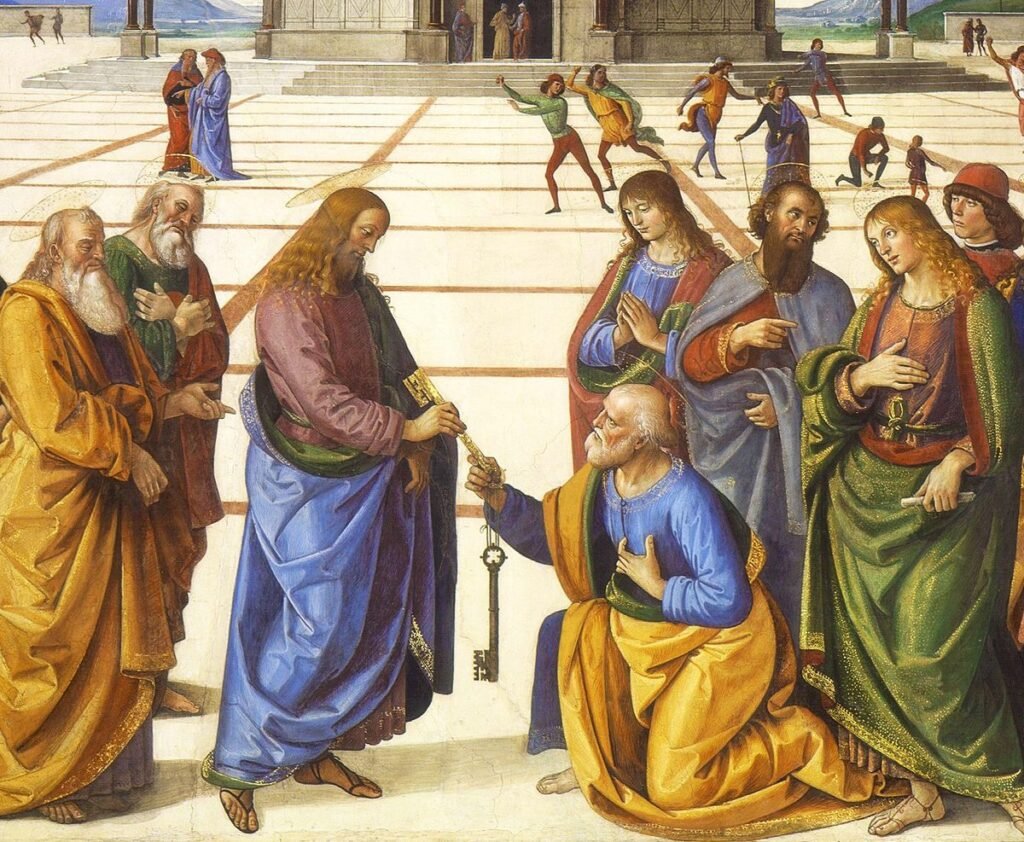
- Simon came from Bethsaida on the Sea of Galilee; he was the son of John. (Jn 1:42, Jn 1:44)3
- He was married and lived in Capernaum, where Jesus healed his mother-in-law. (Mk 1:29–31)3
- He fished with his brother Andrew and with the family of Zebedee. (Lk 5:10)3
- Jesus gave him the name Cephas, in Greek Petros: rock. (Jn 1:42)3
- After Jesus, Peter is the person named most often in the New Testament: Benedict XVI counts the name Petros 154 times, the name Simon 75 times and the Aramaic form Cephas nine times.3
- On the lake he walks on the water toward Jesus. When he begins to sink, he cries out, and Jesus catches him by the hand. (Mt 14:28–31)4
- Near Caesarea Philippi he professes that Jesus is the Christ. (Mk 8:29, Mt 16:16)3
- Simon Peter holds the first place among the Twelve. In the words of the Catechism, “the Lord made Simon alone, whom he named Peter, the ‘rock’ of his Church.”56
- After denying Jesus three times, he weeps bitterly; after Easter, Jesus asks him three times whether he loves him and entrusts his flock to him. (Lk 22:61–62, Jn 21:15–17)78
- According to tradition, Peter went by way of Antioch to Rome and died there as a martyr on a cross. St. Peter's Basilica stands over his tomb.9
Bible passages: Mt 4:18–20Lk 5:1–11Jn 1:40–42Mk 1:29–31Mt 14:28–31Mt 16:13–20Lk 22:54–62Jn 21:15–19
Andrew
Peter's brother, the first called
- Andrew is the brother of Simon Peter; Jesus calls them both by the Sea of Galilee. (Mt 4:18–20, Mk 1:16–18)10
- He was first a disciple of John the Baptist and followed Jesus after John pointed to him as the Lamb of God. Then he brought his brother to Jesus. (Jn 1:35–42)10
- The Byzantine Church calls him the “Protoclete”, the first called.10
- When Jesus feeds the five thousand, Andrew points to a boy with five barley loaves and two fish. (Jn 6:8–9)10
- With Philip, the other apostle with a Greek name, he brings to Jesus some Greeks who want to see him. (Jn 12:20–22)10
- According to tradition, he died at Patras in Greece on an X-shaped cross, known as St. Andrew's cross. In 1964 Pope Paul VI returned his relic, kept until then in St. Peter's Basilica, to Patras.10
Bible passages: Mt 4:18–20Jn 1:35–42Jn 6:8–9Jn 12:20–22Mk 13:3–4
James, son of Zebedee
fisherman, one of the three closest to Jesus
- James is the brother of John. Jesus calls the two by the lake while they are mending their nets in the boat with their father Zebedee. (Mt 4:21–22, Mk 1:19–20)11
- With Peter and John he is there when the daughter of Jairus is raised, at the Transfiguration and in Gethsemane. (Mk 5:37, Mk 9:2, Mk 14:33)2
- Jesus calls the two brothers “sons of thunder”. (Mk 3:17)2
- Through their mother the brothers ask for the places beside Jesus in his kingdom; Jesus asks whether they can drink the cup that he is going to drink. (Mt 20:20–23, Mk 10:35–40)2
- He is the first of the Twelve to die for Christ: King Herod Agrippa has him killed by the sword. (Acts 12:1–2)2
- A later tradition, going back at least to Isidore of Seville, says that he preached in Spain. By an ancient tradition his tomb is venerated at Santiago de Compostela.2
Bible passages: Mt 4:21–22Mk 3:17Mk 5:37Mk 9:2Mk 10:35–40Mk 14:33Acts 12:1–2
John, son of Zebedee
fisherman, apostle
- John is the brother of James. Jesus calls him while he is mending the nets with his brother. (Mt 4:21, Mk 1:19)11
- His Hebrew name means “the Lord has worked grace”.11
- With Peter and James he belongs to the innermost circle around Jesus. (Mk 5:37, Mk 9:2, Mk 14:33)11
- With Peter he prepares the room for the Passover meal. (Lk 22:8)11
- At the foot of the cross he stands with the mother of Jesus. (Jn 19:25–27)11
- Tradition sees in him the disciple whom Jesus loved; Benedict XVI notes that scholars today dispute this identification. (Jn 13:23)11
- According to an ancient tradition, he worked for many years in Ephesus and died there at a very great age under Emperor Trajan. The Church connects his name with the fourth Gospel, the Letters of John and the Book of Revelation.111213
Bible passages: Mt 4:21–22Mk 1:19–20Mk 5:37Mk 9:2Lk 22:8Jn 19:25–27Jn 20:2–8
Philip
apostle from Bethsaida
- Philip came from Bethsaida, the town of Andrew and Peter. (Jn 1:44)14
- He brings Nathanael to Jesus with the words “Come and see.” (Jn 1:45–46)14
- Before feeding the five thousand, Jesus asks him where they can buy bread. Philip works out that two hundred days' wages worth of food would not be enough. (Jn 6:5–7)14
- With Andrew he brings to Jesus some Greeks who want to see him. (Jn 12:20–22)14
- At the Last Supper he asks Jesus to show them the Father. Jesus answers that whoever has seen him has seen the Father. (Jn 14:8–9)14
- According to later accounts, he preached in Greece and Phrygia and died at Hierapolis. His relics are venerated with those of James the Less in the Basilica of the Twelve Holy Apostles in Rome.1415
Bible passages: Jn 1:43–46Jn 6:5–7Jn 12:20–22Jn 14:8–9
Nathanael (Bartholomew)
apostle from Cana
- Tradition identifies the apostle Bartholomew with Nathanael, whom John names alongside Philip.16
- Bartholomew is an Aramaic name meaning “son of Talmay”. Nathanael means “God has given”.16
- Nathanael came from Cana in Galilee. (Jn 21:2)16
- At first he doubts that anything good can come from Nazareth; Jesus calls him a true Israelite in whom there is no duplicity. (Jn 1:46–47)16
- Then he professes Jesus as the Son of God and the King of Israel. (Jn 1:49)16
- His relics are venerated in Rome in his church on Tiber Island; Emperor Otto III is said to have brought them there in 983.16
Bible passages: Jn 1:45–51Jn 21:2
Thomas
apostle, called Didymus
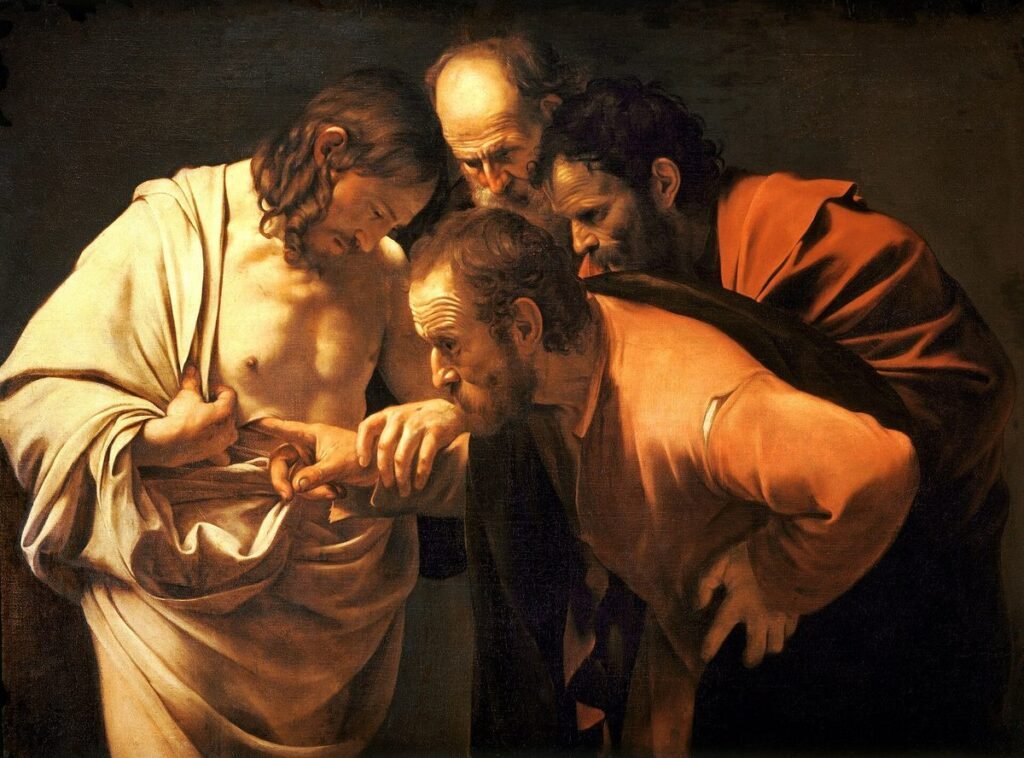
- His name means “twin”; John calls him Didymus. (Jn 11:16, Jn 20:24)17
- When Jesus decides to go to Lazarus in Bethany, Thomas urges the others to go with him, even though it means danger. (Jn 11:16)17
- At the Last Supper he asks about the way. Jesus answers that he himself is the way and the truth and the life. (Jn 14:5–6)17
- Eight days after Easter he professes before the risen Lord: “My Lord and my God!” (Jn 20:24–29)17
- According to ancient tradition, he preached the Gospel in Syria and Persia and as far as India.17
- His relics rested in Edessa; today his tomb is venerated at Ortona on the Adriatic coast of Italy.18
Bible passages: Jn 11:16Jn 14:5–6Jn 20:24–29Jn 21:2
Matthew (Levi)
tax collector in Capernaum, apostle
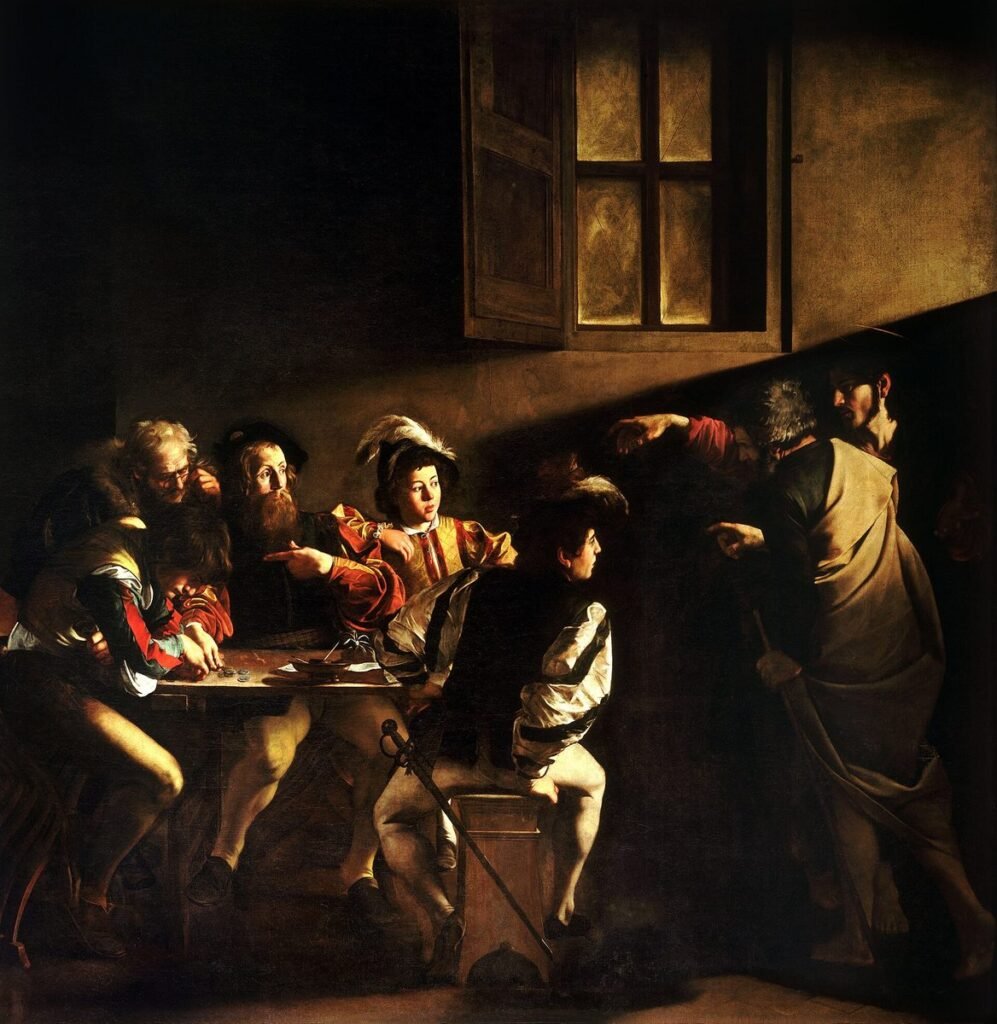
- Matthew was a tax collector. Mark and Luke call him Levi. (Mt 9:9, Mk 2:14, Lk 5:27)19
- His Hebrew name means “gift of God”.19
- He probably sat at the customs post in Capernaum, where Jesus often stayed.19
- At the call of Jesus he gets up and follows him. Then he gives a great banquet in his house, where tax collectors and sinners sit at table with Jesus. (Mt 9:9–13, Lk 5:29)19
- Tax collectors gathered tolls and taxes for the rulers. Many of their countrymen counted them among sinners, so the disciples are asked why their teacher eats with tax collectors and sinners. (Mt 9:10–11)20
- The early Church agreed in naming him as the author of the first Gospel, beginning with Papias, bishop of Hierapolis, around the year 130. According to Eusebius, he first preached among the Jews.19
Bible passages: Mt 9:9–13Mk 2:13–17Lk 5:27–32Mt 10:3
James, son of Alphaeus
apostle, “the Lesser”
- He appears in all four lists of the Twelve, always as “son of Alphaeus”; he is called “the Lesser” to tell him apart from the son of Zebedee. (Mt 10:3, Mk 3:18, Lk 6:15, Acts 1:13)21
- He has often been identified with James “the younger”, the son of a Mary who stood with the mother of Jesus at the cross. (Mk 15:40, Jn 19:25)21
- The Acts of the Apostles shows a James at the head of the Church in Jerusalem. By Semitic custom he is called the “brother” of the Lord, a close relative of Jesus. Whether he is the same person as the apostle is debated. (Acts 15:13–21, Gal 1:19)2122
- Tradition attributes to him the Letter of James, which insists that faith without works is dead. (Jas 2:26)21
- According to the historian Josephus, this James was stoned in the year 62.21
Bible passages: Mt 10:3Mk 3:18Lk 6:15Acts 1:13Acts 15:13–21Jas 2:14–26
Simon the Cananean, the Zealot
apostle
- Matthew and Mark call him the Cananean, Luke the Zealot. Both names go back to a Hebrew word for “zeal”. (Mt 10:4, Mk 3:18, Lk 6:15)23
- Benedict XVI thinks it likely that, even if he was not a member of the nationalist Zealot movement, he was marked by a passionate zeal for God, his people and the divine Law.23
- That Jesus called him and the tax collector Matthew into the same circle shows how different the Twelve were.23
- A later tradition has him preach in Persia with Jude Thaddeus and die a martyr there. The Western Church honors the two together on October 28; in Rome his relics are venerated in St. Peter's Basilica.24
Jude Thaddeus
apostle
- Matthew and Mark call him Thaddeus, Luke “Judas the son of James”. (Mt 10:3, Mk 3:18, Lk 6:16)23
- The name Thaddeus is of uncertain origin; Benedict XVI mentions the explanation “magnanimous”.23
- At the Last Supper he asks Jesus why he will reveal himself to the disciples and not to the world. (Jn 14:22–23)23
- Tradition attributes to him the Letter of Jude in the New Testament.23
- Catholics invoke him as the patron saint of impossible causes.25
Bible passages: Mt 10:3Lk 6:16Jn 14:22–23
Judas Iscariot
one of the Twelve
- His surname is most often explained as “man from Kerioth”, a village near Hebron.26
- In the lists of the Twelve he is always named last. (Mk 3:19)26
- He kept the common purse of the Twelve. (Jn 12:6, Jn 13:29)26
- He hands Jesus over for thirty pieces of silver and later regrets it. One explanation of his surname reads it as “the one who is to hand him over”. (Mt 26:14–16, Mt 26:47–50, Mt 27:3–5)26
- Benedict XVI stresses that the mystery of his choice and of his eternal fate remains; it is not for us to judge it.26
- Matthias takes his place among the Twelve. (Acts 1:15–26)26
Bible passages: Jn 12:4–6Mt 26:14–16Mt 26:47–50Mt 27:3–5Acts 1:15–26
Matthias
chosen as an apostle after Easter
- After the Ascension the community in Jerusalem puts forward two men who had been with Jesus since the baptism of John: Joseph called Barsabbas and Matthias. The lot falls upon Matthias. (Acts 1:21–26)26
- He takes the place of Judas Iscariot and is counted with the eleven apostles. (Acts 1:26)26
- According to tradition, St. Helena brought his relics to Rome, and part of them came to Trier in Germany.27
- The Church celebrates his feast on May 14.2728
Bible passages: Acts 1:15–26
The family of Jesus and the Baptist
Mary, the mother of Jesus
from Nazareth
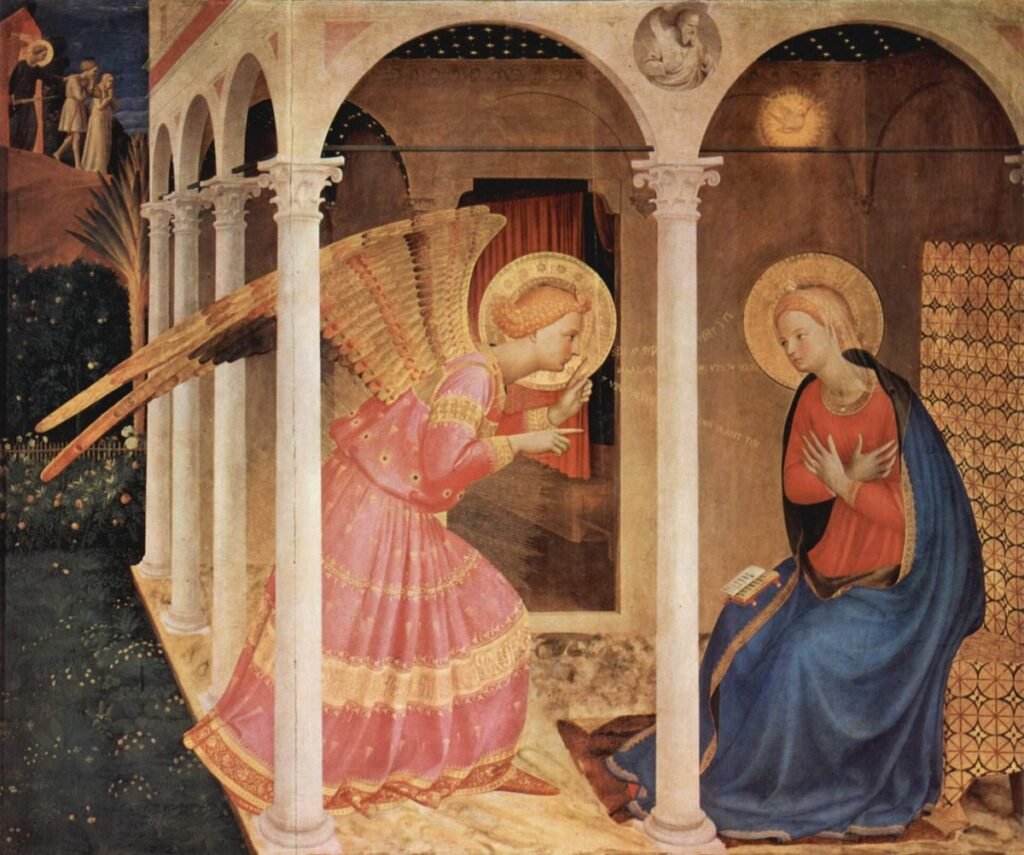
- In Nazareth she receives the message of the angel Gabriel. (Lk 1:26–38)29
- The Gospels call her “the mother of Jesus”; Elizabeth greets her as “the mother of my Lord”. (Jn 2:1, Jn 19:25, Lk 1:43)30
- With Elizabeth she praises God in the canticle the Church calls the Magnificat. (Lk 1:46–55)31
- At the wedding at Cana she turns to Jesus when the wine runs short. (Jn 2:1–11)4
- She stands by the cross. After the Ascension she prays with the apostles for the gift of the Spirit. (Jn 19:25–27, Acts 1:14)32
- The Church confesses that Mary is truly the Mother of God.30
- Where the Gospels speak of brothers and sisters of Jesus, the Church has always understood this as referring not to other children of Mary but to close relatives. (Mk 6:3, Mt 13:55)22
Bible passages: Lk 1:26–56Lk 2:1–52Jn 2:1–11Jn 19:25–27Acts 1:14
Joseph of Nazareth
husband of Mary, carpenter
- Joseph was betrothed to Mary and was a humble carpenter. (Mt 1:18, Lk 1:27, Mt 13:55)33
- Matthew calls him a righteous man. Through four dreams he learns God's will: he takes Mary into his home, flees with the child to Egypt and comes back. (Mt 1:19–24, Mt 2:13–23)33
- He gives the child the name Jesus, as the angel told him. (Mt 1:21, Mt 1:25)33
- He belonged to the house of David and made the long journey with Mary from Nazareth to Bethlehem. With her he presents Jesus in the temple, and later they search for the twelve-year-old until they find him in the temple. (Lk 2:4–5, Lk 2:22–35, Lk 2:41–50)3334
- Blessed Pius IX declared him Patron of the Catholic Church on December 8, 1870; Venerable Pius XII proposed him as Patron of Workers.33
- The Church celebrates him on March 19 as a solemnity.35
- In Nazareth stands the Franciscan Church of St. Joseph, built in 1914 over the remains of an older church.36
Bible passages: Mt 1:18–25Mt 2:13–23Lk 2:1–7Lk 2:41–52Mt 13:55
John the Baptist
forerunner of the Lord
- He is the son of the priest Zechariah and of Elizabeth. (Lk 1:5–25, Lk 1:57–80)4
- The Church calls him the Lord's immediate forerunner, sent to prepare his way.37
- He baptizes at the Jordan. At the beginning of his public life, Jesus too is baptized by him. (Mk 1:4–11)38
- From prison he sends disciples to Jesus to ask whether he is the one who is to come. (Mt 11:2–6, Lk 7:18–23)4
- Herod Antipas has him arrested and beheaded, according to the Catholic Encyclopedia in the fortress of Machaerus. (Mk 6:17–29)39
- Tradition venerates Ein Karem near Jerusalem as his birthplace. The Church celebrates his birth on June 24 as a solemnity and remembers his martyrdom on August 29.404142
Bible passages: Lk 1:5–25Lk 1:57–80Mk 1:4–11Jn 1:19–36Mt 11:2–6Mk 6:17–29
Zechariah and Elizabeth
parents of John the Baptist
- Zechariah was a priest of the division of Abijah; his wife Elizabeth was descended from Aaron. Both were righteous in the eyes of God, but they had no child and were advanced in years. (Lk 1:5–7)4
- While Zechariah burns incense in the temple, the angel Gabriel announces that he will have a son. Because he doubts, he is unable to speak until the birth. (Lk 1:8–20)4
- Elizabeth is a relative of Mary. When Mary visits her, the infant leaps in her womb, and she greets Mary as the mother of her Lord. (Lk 1:36, Lk 1:39–45)30
- At the circumcision Zechariah writes on a tablet that the child's name is John. At once he can speak again, and he blesses God. (Lk 1:57–79)4
- Tradition venerates Ein Karem near Jerusalem as the place where Mary and Elizabeth met; the Church of the Visitation stands there.31
Bible passages: Lk 1:5–25Lk 1:39–56Lk 1:57–80
Women disciples and friends of Jesus
Mary Magdalene
from Magdala, first witness of the Resurrection
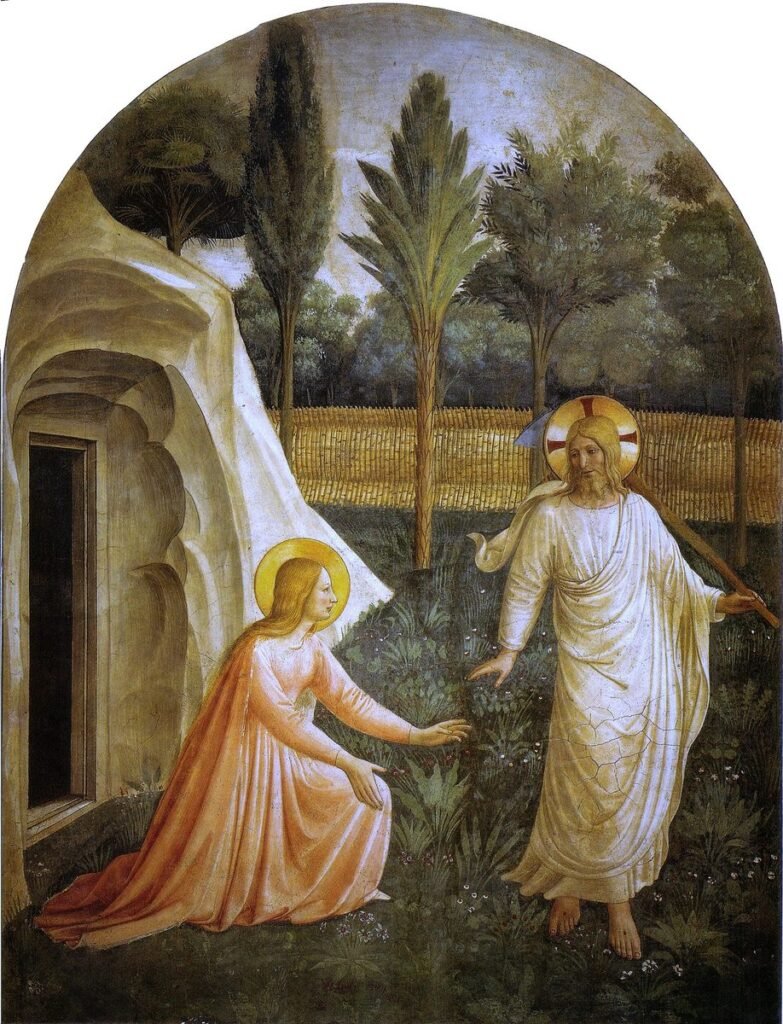
- Luke names her among the women who accompanied Jesus and provided for him out of their resources. Jesus had freed her from seven demons. (Lk 8:1–3)443
- She stands by the cross, and after the sabbath she buys spices to anoint the body. (Jn 19:25, Mk 16:1)4
- On Easter morning she runs to Peter and John and tells them that the stone has been rolled away from the tomb. (Jn 20:1–2)44
- Then she is the first to meet the risen Lord and brings the disciples the news: “I have seen the Lord.” (Jn 20:11–18)4543
- Pope Francis called her “the Apostle of the new and greatest hope”; St. Thomas Aquinas called her the “apostle of the apostles”.4346
- Since 2016 the Church has celebrated her day, July 22, with the rank of a feast.46
Bible passages: Lk 8:1–3Mk 15:40–41Mk 16:1Jn 19:25Jn 20:1–18
Joanna
disciple, wife of Herod's steward
- Luke names Joanna, the wife of Herod's steward Chuza, among the women who accompanied Jesus and provided for him out of their resources, along with Susanna and many others. (Lk 8:1–3)4
- On Easter morning she is at the empty tomb with Mary Magdalene and Mary the mother of James and tells the apostles what they saw. (Lk 24:1–10)4
Martha, Mary and Lazarus
friends of Jesus in Bethany
- Jesus is a guest of the two sisters: Mary listens to him while Martha is busy serving. (Lk 10:38–42)4
- When Lazarus dies, Jesus comes to Bethany. Martha professes that he is the Messiah, the Son of God; at the tomb Jesus weeps. (Jn 11:17–35)4
- John tells how Jesus raises Lazarus four days after his death. (Jn 11:1–44)47
- Six days before Passover, Mary anoints the feet of Jesus in Bethany. (Jn 12:1–8)4
- On July 29 the Church keeps the memorial of Saints Martha, Mary and Lazarus.48
Bible passages: Lk 10:38–42Jn 11:1–44Jn 12:1–8
Nicodemus
Pharisee and member of the Sanhedrin
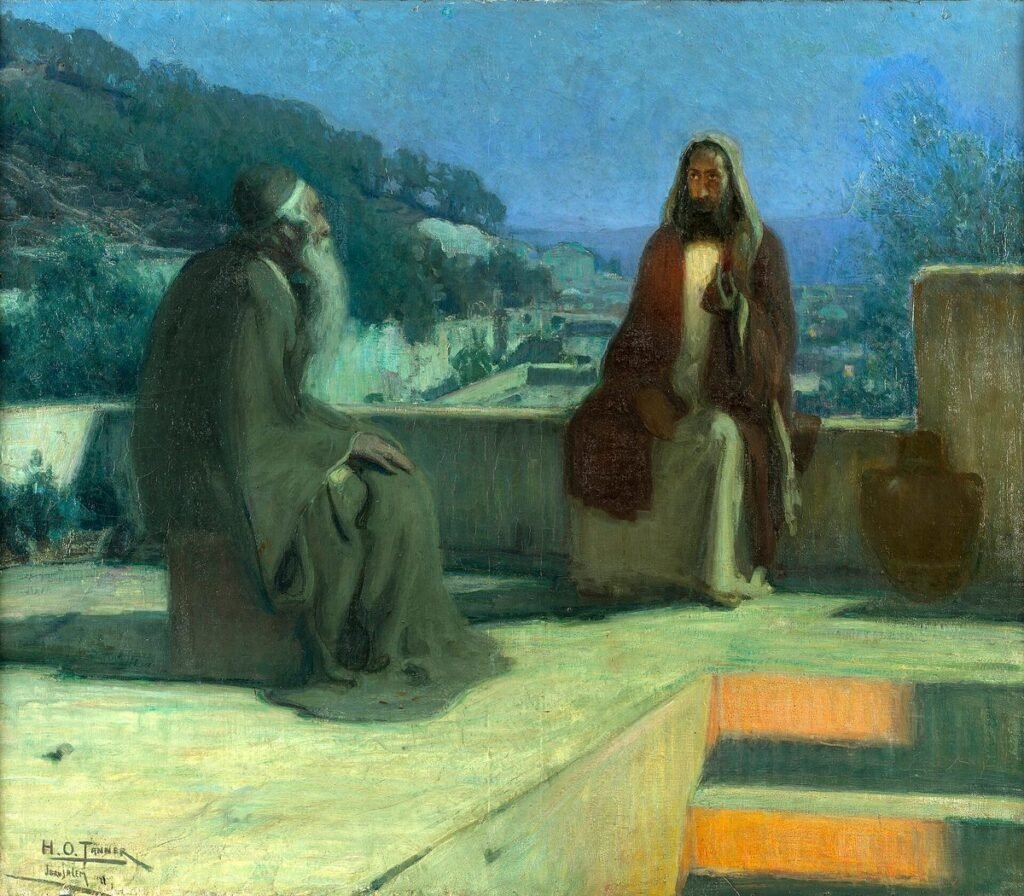
- Nicodemus was a Pharisee and a member of the Sanhedrin. (Jn 3:1, Jn 7:50)49
- He comes to Jesus at night; Jesus calls him “the teacher of Israel”. (Jn 3:1–10)49
- In the Sanhedrin he insists that no one be condemned without a hearing. (Jn 7:50–51)49
- After the death of Jesus he brings myrrh and aloes and helps Joseph of Arimathea with the burial. (Jn 19:38–42)49
Bible passages: Jn 3:1–21Jn 7:45–52Jn 19:38–42
Joseph of Arimathea
council member, a secret disciple
- Joseph of Arimathea was a distinguished member of the council who was awaiting the kingdom of God. He had not consented to the council's plan against Jesus. (Mk 15:43, Lk 23:50–51)4
- John calls him a disciple of Jesus, though a secret one, out of fear. (Jn 19:38)4
- He asks Pilate for the body of Jesus and lays it in a new tomb hewn in the rock; Nicodemus brings myrrh and aloes. (Mt 27:57–60, Jn 19:38–42)449
- The Church venerates the tomb of Jesus in the Church of the Holy Sepulchre in Jerusalem. The buildings of Emperor Constantine there were dedicated on September 13, 335.50
Bible passages: Mk 15:42–46Lk 23:50–53Jn 19:38–42
Encounters with Jesus
The centurion of Capernaum
Roman officer
- In Capernaum a centurion asks Jesus to heal his paralyzed servant. (Mt 8:5–7, Lk 7:1–3)4
- The Jewish elders plead for him: he loves their nation and built their synagogue for them. (Lk 7:3–5)4
- He says he is not worthy to have Jesus enter under his roof; a word would be enough. Jesus praises his faith and heals the servant from a distance. (Mt 8:8–13, Lk 7:6–10)4
- With his words the faithful prepare for Holy Communion at Mass.51
Jairus
synagogue official
- Jairus is one of the synagogue officials. He falls at the feet of Jesus and begs him to save his daughter, who is at the point of death. (Mk 5:22–23)52
- On the way, a woman who has suffered hemorrhages for twelve years touches the cloak of Jesus and is healed. (Mk 5:25–34)4
- Jesus takes only Peter, James, John and the parents with him, takes the twelve-year-old girl by the hand and says the Aramaic words “Talitha koum”: little girl, arise. (Mk 5:37–42)4
Bible passages: Mk 5:21–43Lk 8:40–56Mt 9:18–26
The woman at Jacob's well
Samaritan woman from Sychar
- About noon a woman of Samaria comes to Jacob's well near Sychar. Jesus asks her for a drink, although Jews and Samaritans have little to do with each other. (Jn 4:5–9)4
- He speaks with her about living water and reveals himself to her as the Messiah. (Jn 4:10–26)53
- She goes into the town and tells people about Jesus; many Samaritans come to believe. (Jn 4:28–42)4
- The Catechism sees in the meeting at the well an image of prayer: Christ first seeks us and asks us for a drink.53
Bible passages: Jn 4:1–42
Zacchaeus
chief tax collector in Jericho
- Zacchaeus is a chief tax collector and a wealthy man. Because he is short, he climbs a sycamore tree to see Jesus. (Lk 19:1–4)419
- Jesus stays at his house. Zacchaeus promises to give half of his possessions to the poor and to repay four times over anyone he has cheated. (Lk 19:5–10)4
- In Jericho the Catholic church is dedicated to the Good Shepherd, in memory of Zacchaeus and of the blind man Bartimaeus.54
Bible passages: Lk 19:1–10
Simon of Cyrene
carries the cross of Jesus
On the teaching of the Church. Where the Church has a teaching of her own about a person, for example about Peter or about Mary, we give it briefly and faithfully, following the Catechism of the Catholic Church. What does not come from the Gospels but from tradition, we mark as such.
Sources
- Catechism of the Catholic Church, no. 551
- Benedict XVI, General Audience, June 21, 2006: James, the Greater
- Benedict XVI, General Audience, May 17, 2006: Peter, the fisherman
- New American Bible, Revised Edition (NABRE) © 2010, 1991, 1986, 1970 Confraternity of Christian Doctrine, Washington, D.C.: book abbreviations, verse numbers and names follow this edition; links go to the text on the website of the U.S. Conference of Catholic Bishops
- Catechism of the Catholic Church, no. 552
- Catechism of the Catholic Church, no. 881
- Catechism of the Catholic Church, no. 1429
- Benedict XVI, General Audience, May 24, 2006: Peter, the Apostle
- Catholic Encyclopedia: St. Peter, Prince of the Apostles (J. P. Kirsch, 1911)
- Benedict XVI, General Audience, June 14, 2006: Andrew, the Protoclete
- Benedict XVI, General Audience, July 5, 2006: John, son of Zebedee
- Benedict XVI, General Audience, August 9, 2006: John, the theologian
- Benedict XVI, General Audience, August 23, 2006: John, the Seer of Patmos
- Benedict XVI, General Audience, September 6, 2006: Philip, the Apostle
- Catholic Encyclopedia: St. Philip the Apostle
- Benedict XVI, General Audience, October 4, 2006: Bartholomew
- Benedict XVI, General Audience, September 27, 2006: Thomas, the twin
- Catholic Encyclopedia: St. Thomas the Apostle (H. Thurston, 1912)
- Benedict XVI, General Audience, August 30, 2006: Matthew, the tax collector
- Catholic Encyclopedia: Publican (J. F. Driscoll, 1911)
- Benedict XVI, General Audience, June 28, 2006: James, the Lesser
- Catechism of the Catholic Church, no. 500
- Benedict XVI, General Audience, October 11, 2006: Simon and Jude
- Catholic Encyclopedia: St. Simon the Apostle (K. Löffler, 1912)
- National Shrine of St. Jude (Dominican Friars, Chicago): St. Jude, patron saint of impossible causes
- Benedict XVI, General Audience, October 18, 2006: Judas Iscariot and Matthias
- Catholic Encyclopedia: St. Matthias (with the editor's note on the feast of May 14)
- USCCB, Daily Readings: Feast of Saint Matthias, Apostle (May 14)
- Custodia Terrae Sanctae: Nazareth, the solemnity of the Annunciation of the Lord
- Catechism of the Catholic Church, no. 495
- Custodia Terrae Sanctae: Ain Karem, The Visitation
- Catechism of the Catholic Church, no. 965
- Pope Francis, Apostolic Letter Patris corde on the 150th anniversary of the proclamation of Saint Joseph as Patron of the Universal Church, December 8, 2020
- Catechism of the Catholic Church, no. 534
- USCCB, Daily Readings: Solemnity of Saint Joseph, Spouse of the Blessed Virgin Mary (March 19)
- Custodia Terrae Sanctae: Nazareth, Saint Joseph
- Catechism of the Catholic Church, no. 523
- Catechism of the Catholic Church, no. 535
- Catholic Encyclopedia: Herod (J. Tierney, 1910)
- Custodia Terrae Sanctae: Ain Karem, Saint John the Baptist
- USCCB, Daily Readings: Solemnity of the Nativity of Saint John the Baptist (June 24)
- USCCB, Daily Readings: Memorial of the Passion of Saint John the Baptist (August 29)
- Pope Francis, General Audience, May 17, 2017 (catechesis on Mary Magdalene)
- Benedict XVI, General Audience, June 7, 2006: Peter, the rock
- Catechism of the Catholic Church, no. 641
- Congregation for Divine Worship and the Discipline of the Sacraments, Decree on the celebration of Saint Mary Magdalene, June 3, 2016
- Custodia Terrae Sanctae: Traces of history in Bethany, where Lazarus was resurrected
- USCCB, Daily Readings: Memorial of Saints Martha, Mary, and Lazarus (July 29)
- Catholic Encyclopedia: Nicodemus (J. F. Driscoll, 1911)
- Custodia Terrae Sanctae: Basilica of the Holy Sepulchre
- Catechism of the Catholic Church, no. 1386
- Catholic Encyclopedia: Synagogue (W. Drum, 1912)
- Catechism of the Catholic Church, no. 2560
- Custodia Terrae Sanctae: Jericho, Church of the Good Shepherd
Checked on October 21, 2026. Bible references follow the New American Bible, Revised Edition (NABRE), the Catholic Bible translation of the U.S. bishops. We give the references and sum up the passages in our own words; each reference links to the full text on the bishops' website. Found a mistake? Write to us at hello@biblebehindthescreen.com.
To print
Map: places of the Gospels
Galilee and Judea on one page, with close-ups of the Sea of Galilee and the area around Jerusalem and a list of all the places with their Bible references. For reading along while you watch, at home or in your parish group.
- A map with 22 places of the Gospels
- Bible references from the New American Bible, Revised Edition
- Once a week, an email with our newest guides and articles
Get the map as a PDF
Enter your email address and we will send you the map as a PDF.
Sign-up opens in a few days. Until then, subscribe to the channel and you will be the first to know when the map is ready.
By signing up you confirm that you are at least 16 years old. You will get an email to confirm your address (double opt-in), and you can unsubscribe at any time. More in our privacy policy.
An independent site about the Bible behind movies and shows · not affiliated with any studio or distributor · Bible references from the NABRE · YouTube @biblebehindthescreen